

Best sex toy materials for safe, pleasurable choices
TL;DR:
- Porous materials like jelly and PVC are less hygienic and harder to clean thoroughly.
- Silicone, glass, stainless steel, and ABS plastic are non-porous and safest for hygiene.
- Always check for transparent labeling or third-party verification for material safety.
Picking up a new sex toy should feel exciting, not like sitting an exam in materials science. Yet the moment you start browsing, you’re hit with terms like TPE, ABS, medical-grade silicone, and jelly rubber, and suddenly the whole experience feels more stressful than sensual. The material a toy is made from matters far more than most people realise: it shapes how safe it is against your body, how intensely you feel it, how long it lasts, and whether it can ever be properly cleaned. This guide cuts through the jargon so you can choose with confidence.
Table of Contents
- How to evaluate sex toy materials
- Popular sex toy material types explained
- Sex toy materials comparison: Safety, sensation, and upkeep
- How to choose the right material for your needs
- Why material myths persist and what really matters
- Discover your perfect match with Intimate Elegance
- Frequently asked questions
Key Takeaways
| Point | Details |
|---|---|
| Prioritise non-porous options | Choose materials like silicone, glass, or steel for the most hygienic and safest experience. |
| Consider individual needs | Check for allergies, sensation preferences, and cleaning routines before deciding. |
| Porous means extra care | Porous toys can trap bacteria and often require more diligent cleaning or avoidance. |
| Material impacts pleasure | Each material produces a unique sensation, so match your choice to your desired experience. |
How to evaluate sex toy materials
Before you compare specific materials, it helps to understand the five core criteria that separate a genuinely good toy from one that looks appealing but falls short where it counts.
- Porosity: This is the single most important factor. Non-porous sex toy materials are safer for hygiene because they do not absorb bodily fluids or harbour bacteria between uses. Porous materials, no matter how thoroughly you scrub them, can retain microscopic residue.
- Cleanability: Even non-porous materials differ in how convenient they are to clean. Some can be boiled or put in a dishwasher; others need careful hand-washing with a specialist cleaner.
- Allergies and skin sensitivity: Latex allergies are more common than many people expect, and certain soft plastics can trigger irritation in sensitive skin. Always check material declarations before buying.
- Sensation: Firmness, flexibility, and surface texture all influence how a toy feels in use. A soft, silky material delivers a very different experience from something rigid and smooth.
- Durability: The right material, cared for properly, can last years. The wrong one may degrade, discolour, or crack within months.
Porosity is not just a hygiene concern. A porous material can also harbour old lubricant residue, which affects both smell and texture over time.
Reviewing these five factors together gives you a structured way to assess any toy before you buy. For a broader overview of staying safe, our sex toy safety tips article covers the full picture, and if you already own toys and want to care for them properly, the toy maintenance guide is essential reading.
Pro Tip: If a product listing does not clearly state the material, treat that as a warning sign. Reputable brands are always transparent about what their toys are made from.
Popular sex toy material types explained
With those five criteria in mind, here is a plain-English breakdown of the materials you will encounter most often.
Silicone is widely regarded as the gold standard. It is hypoallergenic, wonderfully soft, and fully non-porous. You can boil it, use a toy cleaner, or run it through a dishwasher (without detergent). It comes in a huge range of firmnesses, from cloud-soft to almost rigid, giving you real control over the sensation you want.
Glass is a surprising favourite for many experienced users. Medical-grade borosilicate glass is body-safe, non-porous, and completely smooth. Its firmness makes sensations very direct and precise. One underrated benefit: glass responds to temperature quickly, which makes it ideal for warm or cool temperature play.
Stainless steel shares glass’s temperature-play qualities but adds satisfying weight. That heft creates a feeling of fullness and pressure that lighter toys simply cannot replicate. It is also extremely durable and easy to sterilise.
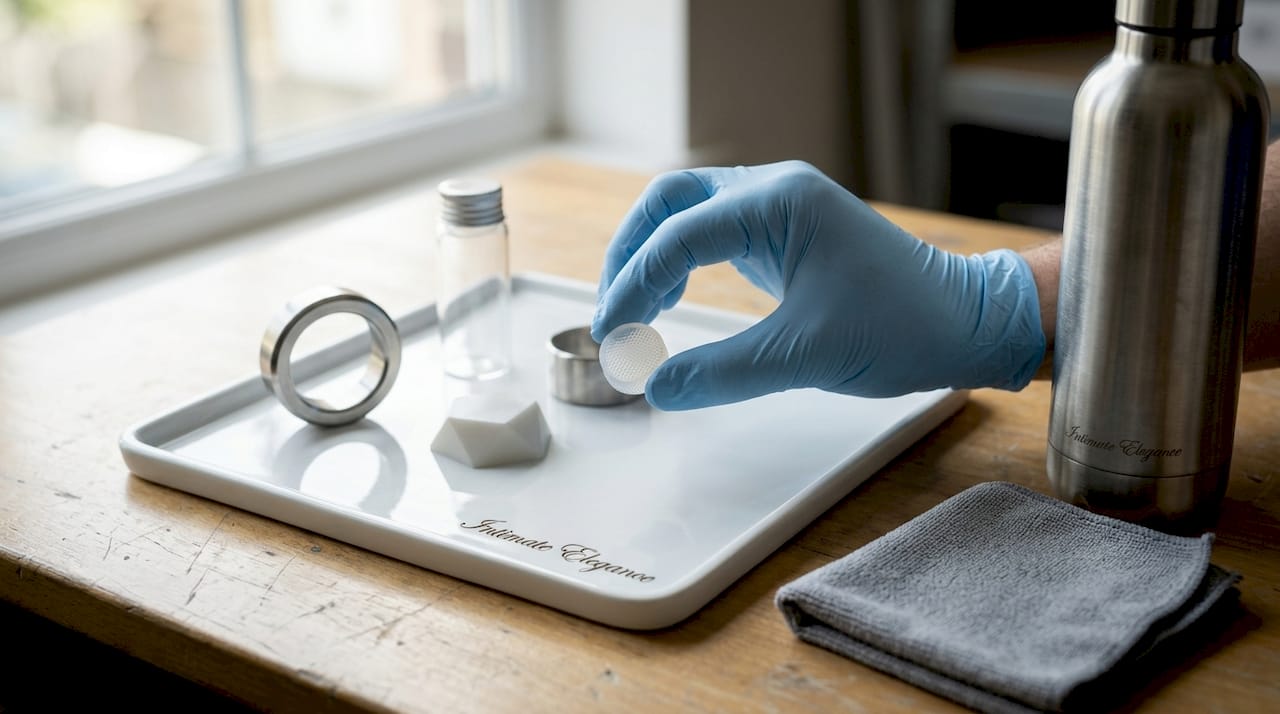
ABS plastic is the firm plastic used in the rigid parts of many vibrators. It is non-porous and body-safe, though it offers less flexibility than silicone. It is often used as a handle or motor casing rather than the primary contact surface.
TPE and TPR are soft, stretchy, and affordable, which is why they appear in so many budget-friendly toys. The catch is that they are porous, which makes thorough cleaning impossible. Using a condom over these toys reduces risk significantly.
Jelly rubber and PVC share the same porosity problem and can contain phthalates, chemical plasticisers linked to health concerns. These are the materials most worth avoiding for any internal use.
Latex is rarely used in hard toys but appears in some sheaths and accessories. Beyond its well-known allergy risk, it is also porous and less suitable for anything designed for internal use.
As a general rule, silicone, glass, steel, and ABS are non-porous and the better choice for hygiene. For more on finding truly safe options, see our guide on choosing safe sex toys, and for cleaning routines tailored to each material, the sex toy cleaning guide has everything you need.
Pro Tip: Always use water-based lubricant with silicone toys. Silicone-based lubricants can degrade the surface of silicone toys over time, dulling the texture and compromising the material.
Sex toy materials comparison: Safety, sensation, and upkeep
A direct comparison makes it far easier to see which material suits your priorities at a glance.
| Material | Porosity | Cleaning | Lube compatibility | Best for |
|---|---|---|---|---|
| Silicone | Non-porous | Boil or dishwasher | Water-based only | Versatile, everyday use |
| Glass | Non-porous | Boil or dishwasher | All types | Temperature play, precision |
| Stainless steel | Non-porous | Boil or wipe | All types | Weight, temperature play |
| ABS plastic | Non-porous | Wipe with cleaner | All types | Firm vibration |
| TPE/TPR | Porous | Surface clean only | Water-based only | Budget use with condom |
| Jelly/PVC | Porous | Surface clean only | Avoid oil-based | Not recommended internally |
A few things stand out immediately. Non-porous materials are recommended for easy, thorough cleaning because no amount of scrubbing can fully decontaminate a porous surface. Glass and steel are the only materials fully compatible with every lubricant type, which gives you the most flexibility.
Key takeaways from this comparison:
- Silicone offers the best all-round balance of safety, sensation, and ease of care.
- Glass and steel reward users who want precision, weight, or temperature play.
- TPE/TPR can be used more safely with a condom, but should not be considered a long-term investment.
- Jelly and PVC toys are the highest-risk category and are best avoided for internal use entirely.
For step-by-step instructions on cleaning sex toys made from each material, our dedicated guide covers every scenario.
Approximately 50% of sex toys sold globally are still made from porous materials, which means informed purchasing decisions genuinely protect your health.
How to choose the right material for your needs
Knowing the materials is one thing. Choosing the right one for your specific situation is the real skill. Work through these steps before committing to a purchase.
- Identify your top priority. If hygiene is your main concern, go straight to silicone, glass, or steel. If budget matters most, ABS plastic gives you a non-porous option at a lower price point than premium silicone.
- Check for allergies and sensitivities. If you have a latex allergy or react easily to chemicals, avoid latex, jelly, and PVC entirely. Stick to materials with a verified body-safe or medical-grade label.
- Consider internal versus external use. For external stimulation, even a lower-grade material poses far less risk. For any internal use, non-porous and body-safe should be non-negotiable.
- Think about your lifestyle. Travel frequently? Glass and steel are robust and do not degrade. Store toys for extended periods? Silicone ages well; jelly materials can become sticky or smell unpleasant over time.
- Factor in lubricant habits. If you love silicone-based lubricants, glass or steel is a better match than a silicone toy.
A toy that ticks every box on paper but requires a specialist cleaning routine you will not realistically follow is not the right toy for you. Honesty about your habits saves both money and risk.
Choosing non-porous materials reduces risk and maximises pleasure by keeping surfaces hygienic and responsive use after use. For a broader look at how material connects to your overall wellbeing, explore why material matters in our evidence-backed guide.
Pro Tip: When in doubt, silicone is almost always the right answer. It suits beginners and experienced users alike, covers nearly every toy category, and is available across a wide price range.
Why material myths persist and what really matters
Here is something we see repeatedly: people assume that because a toy is labelled “silicone” or “plastic,” it is automatically safe. That is not true. Not all silicone is medical-grade. Not all plastic is ABS. Blended materials labelled as “silicone” can still contain phthalates if the formulation is not pure. The label matters far less than third-party verification or a transparent ingredient declaration from the manufacturer.
Porosity is also consistently underestimated. Many buyers focus on colour, shape, or vibration patterns while assuming cleaning will take care of any hygiene concerns. In practice, a porous toy used repeatedly without a condom is a genuine health risk, regardless of how often you clean it.
There is also a cost myth worth addressing. Spending less on a jelly toy feels economical, but when you factor in shorter lifespan and replacement costs, a quality silicone toy often works out cheaper over time. Durability and even sustainable sex toys made from long-lasting materials reduce waste significantly.
Direct, accurate knowledge really does lead to better choices, more pleasure, and fewer regrets.
Discover your perfect match with Intimate Elegance
If this guide has helped clarify what you are looking for, the next step is finding a toy that delivers on those criteria in practice.
At Intimate Elegance, every product in our curated collection is selected with body safety and quality at the forefront. If silicone is your material of choice, the Intense Hilari pink silicone vibrator is a beautifully crafted option that showcases exactly what premium silicone can feel like. For those interested in combined stimulation, the Ibiza rotating dual vibrator offers body-safe design with exceptional versatility. Browse our full range knowing that every item ships discreetly across the EU, with your privacy always protected.
Frequently asked questions
Which sex toy materials are safest for sensitive skin?
Medical-grade silicone, glass, and stainless steel are safest for sensitive skin because they are non-porous and hypoallergenic, making them far less likely to trigger irritation or reactions.
How can I tell if a sex toy material is non-porous?
Look for toys clearly labelled as silicone, glass, stainless steel, or ABS plastic with a body-safe certification. These non-porous materials prevent bacterial harbouring and are straightforward to verify through reputable brand declarations.
Are jelly or PVC sex toys safe to use?
Jelly and PVC toys are porous and can trap bacteria, making them a higher hygiene risk. Porous toys like PVC can harbour bacteria and pose ongoing hygiene risks, so body-safe alternatives are strongly preferable for internal use.
How does material choice affect cleaning routines?
Non-porous materials like silicone, glass, and steel allow thorough sterilisation, while porous options only permit surface cleaning. Choosing non-porous materials means your cleaning routine is both simpler and genuinely effective at reducing bacterial risk.
Recommended
- How to choose sex toys for a safe and luxurious experience – Intimate Elegance
- Top sex toy safety tips to enhance pleasure and health – Intimate Elegance
- Explore key types of sex toys for pleasure and intimacy – Intimate Elegance
- Why quality matters: enhance intimacy with better sex toys – Intimate Elegance