

How to introduce toys in relationships: deeper intimacy
TL;DR:
- Introducing shared pleasure tools can strengthen communication and increase relationship satisfaction.
- Open, respectful conversations about boundaries and curiosities are essential before using toys.
- Proper selection and gradual integration of toys enhance intimacy without replacing emotional connection.
Intimacy in long-term relationships naturally evolves, and for many couples, routine quietly replaces the excitement that once felt effortless. If you and your partner have been wondering how to reignite that spark, you are far from alone. Research consistently shows that couples who introduce shared pleasure tools report stronger communication, higher satisfaction, and more frequent connection. This article walks you through every stage of the process, from the first conversation to ongoing use, with practical advice grounded in expert guidance. There is no pressure here, only genuine support for two people who want to explore something new together.
Table of Contents
- Preparing for a positive introduction
- Choosing the right toys and materials
- Steps to introduce toys into your relationship
- Overcoming common challenges and troubleshooting
- What most guides miss: The real foundation of intimacy
- Discover curated intimacy enhancers at Intimate Elegance
- Frequently asked questions
Key Takeaways
| Point | Details |
|---|---|
| Communication is key | Open, honest discussion sets the foundation for comfort and shared pleasure when introducing toys. |
| Start simple and safe | Begin with beginner-friendly, body-safe toys and shop together for the best experience. |
| Routine enhances satisfaction | Regular, consensual use of toys leads to higher intimacy, satisfaction, and frequency in relationships. |
| Troubleshooting is easy | Address challenges through empathy, patience, and checking in, ensuring both partners feel secure. |
| Trusted resources matter | Choosing from vetted brands and reputable shops protects health and supports lasting pleasure. |
Preparing for a positive introduction
Before any toy enters the picture, the most important work happens in conversation. Emotional openness and respecting boundaries are the true foundation of a successful introduction, and skipping this step is where most couples stumble. Think of it less as a product decision and more as a shared exploration you are choosing to begin together.
The language you use matters enormously. Framing the conversation around “we” rather than “you” removes any sense of blame or inadequacy. Instead of suggesting a toy because something feels lacking, position it as something you are both curious about. Communication and consent are vital at every stage, not just at the beginning. Consent is an ongoing dialogue, not a single checkbox.
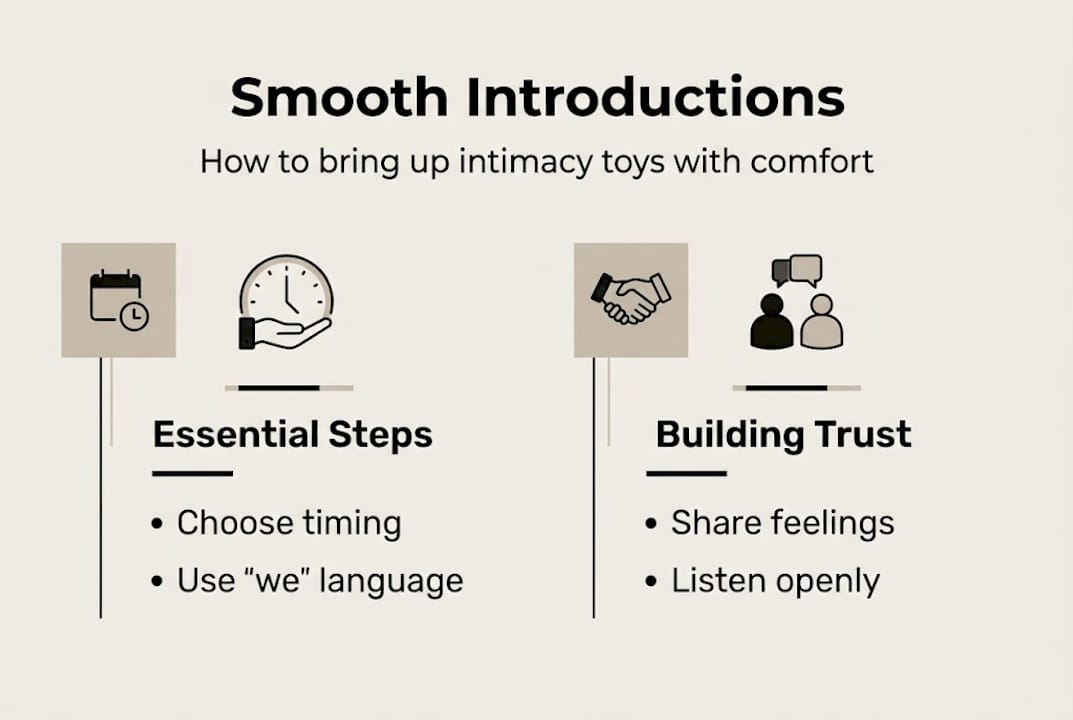
Timing is equally important. Choose a neutral, relaxed moment outside the bedroom, perhaps over a quiet evening at home, rather than raising the topic mid-intimacy. This removes pressure and gives both of you space to respond honestly.
Here is a quick comparison of two common approaches:
| Approach | Outcome |
|---|---|
| Framing as mutual exploration | Builds curiosity, reduces anxiety |
| Surprising your partner with a toy | Can feel pressuring or one-sided |
| Discussing preferences beforehand | Aligns expectations and increases comfort |
| Avoiding the conversation entirely | Leaves assumptions unchallenged |
When you do have that first chat, consider covering these points together:
- What you are both curious or uncertain about
- Any firm boundaries either of you holds
- What you hope the experience adds to your connection
- How you will check in with each other during and after
Exploring enhancing relationships through shared discovery is one of the most powerful things a couple can do, and the evidence-backed benefits are well documented across multiple studies.
Pro Tip: Do not lead with the toy itself. Begin with a general conversation about what you both enjoy and what you are curious to try. The toy becomes a natural next step, not a surprise.
Choosing the right toys and materials
With open communication established, the next step is selecting toys that suit you both. The good news is that the market has never been more beginner-friendly, and knowing what to look for makes the whole process far less overwhelming.
Start with external, simple options such as vibrators, cock rings, or playful couples’ dice before moving to anything more involved. These options are low-pressure, easy to use together, and introduce sensation without requiring significant adjustment.
Material safety is non-negotiable. Always choose body-safe silicone, glass, or stainless steel. Avoid porous materials such as rubber or jelly, which can harbour bacteria even after cleaning. Look for toys from reputable brands that clearly state their materials.
Here is a helpful overview of beginner-friendly options:
| Toy type | Best for | Notes |
|---|---|---|
| C-shaped vibrator | Simultaneous stimulation | Hands-free, suits most body types |
| Cock ring | Enhanced sensation for both | Simple, low-cost entry point |
| Couples’ dice | Playful exploration | Non-intimidating, great icebreaker |
| Bullet vibrator | Clitoral stimulation | Compact, versatile, easy to use |
Shopping together is one of the most underrated parts of this process. Browsing options as a couple builds anticipation, normalises the conversation, and ensures both partners feel included in the decision. It transforms the purchase from something one person is imposing into something you are both choosing.

For guidance on choosing safe sex toys and exploring toy types in more detail, our blog covers both topics thoroughly.
A few things to keep in mind when selecting:
- Prioritise body-safe materials above all else
- Consider noise levels if privacy matters to you
- Check whether the toy is rechargeable or battery-powered
- Read reviews from couples specifically, not just individuals
Pro Tip: Always use water-based lubricant with silicone toys. Oil-based or silicone-based lubricants can degrade silicone materials over time, shortening the life of your toy and potentially affecting safety.
Steps to introduce toys into your relationship
Once you have chosen your toys together, a thoughtful sequence makes the first experience feel natural rather than awkward. Rushing this stage is the most common mistake couples make.
A seven-step process recommended by therapists and sex educators offers a reliable framework:
- Choose a neutral time to raise the topic, free from pressure or expectation
- Frame it as shared exploration, using curious and inclusive language
- Research and shop together, either online or in a physical store
- Start simple, with a low-intensity toy that suits both partners
- Check in during use, asking openly how each of you feels
- Debrief afterwards, sharing what worked and what you might adjust
- Establish a routine that incorporates toys naturally, without forcing frequency
The difference between a gradual and an immediate introduction is significant:
| Approach | Likely outcome |
|---|---|
| Gradual, step-by-step introduction | Higher comfort, stronger connection |
| Immediate, unplanned use | Potential awkwardness or discomfort |
| Regular check-ins throughout | Builds trust and ongoing consent |
| Skipping the debrief | Leaves unspoken concerns unaddressed |
Research supports this approach. Enhanced arousal and reduced pressure are among the most consistently reported benefits for couples who introduce toys thoughtfully. Studies also link partnered toy use to higher overall satisfaction and more frequent intimacy.
Our step-by-step toy guide and intimacy guides offer additional support for each stage of this process.
A critical reminder: Toys are not a solution for deeper emotional issues within a relationship. If there is unresolved conflict or disconnection, address that first through open conversation or professional support. Toys work best when the foundation is already strong.
Overcoming common challenges and troubleshooting
Even with the best preparation, you may encounter moments of awkwardness or uncertainty. This is completely normal, and most challenges are easier to resolve than you might expect.
One of the most common concerns is a partner feeling insecure, as though the toy implies they are not enough. Partner insecurity and initial awkwardness are frequently cited, but with consistent communication, they rarely persist. The key is to frame every interaction around enhancement, not replacement.
Here are the most common challenges and how to address them:
- Insecurity: Reassure your partner that the toy adds to the experience you share together, not substitutes for them
- Awkwardness: Slow down, laugh together if needed, and remember that first attempts are rarely perfect
- Mismatched comfort levels: Revisit your boundaries conversation and adjust the pace accordingly
- Hygiene concerns: Clean toys thoroughly after every use with appropriate toy cleaner or mild soap and warm water
- Over-reliance: Keep toys as one element of your intimacy, not the only one
The data here is reassuring. No negative psychological effects have been found in major studies on regular toy use, and regular use actually correlates with higher satisfaction and orgasm frequency. Couples using toys together report 71% weekly intimacy compared to 59% among those who do not.
For practical guidance on cleaning and hygiene, toy maintenance tips, and safety tips, our blog covers each area in depth.
Pro Tip: Never use a toy as a workaround for emotional distance. If something feels off between you and your partner, talk it through first. A toy introduced into tension tends to amplify it rather than ease it.
What most guides miss: The real foundation of intimacy
Most articles on this topic focus heavily on product selection and technique, which is useful, but they often overlook the single most important variable: the quality of the connection between two people.
Toys are tools. Exceptional tools, when chosen thoughtfully, but tools nonetheless. Their real power lies not in the sensation they provide but in what they invite: deeper intimacy through vulnerability, curiosity, and shared discovery. A couple who communicates openly will get more from a simple vibrator than a disconnected couple will get from the most sophisticated device on the market.
What we have observed, and what the research consistently confirms, is that the couples who benefit most are those who treat toy exploration as an extension of their emotional intimacy, not a shortcut to it. The conversation before, the check-in during, and the debrief after matter just as much as the experience itself. Novelty fades. Genuine mutual curiosity does not.
Discover curated intimacy enhancers at Intimate Elegance
You now have the knowledge to approach this journey with confidence and care. The next step is finding products that match your intentions.

At Intimate Elegance, we have curated a collection designed specifically with couples in mind, from playful dice for couples that make exploration feel light and fun, to elegant accessories like our lace mask for couples that add a touch of luxury to your shared experience. Every product is selected for quality, body safety, and discretion. We offer anonymous EU-wide shipping and secure checkout, so your privacy is always protected. Browse together, choose together, and let the experience begin on your terms.
Frequently asked questions
What are the best starter toys for couples?
Beginner couples should consider C-shaped vibrators, cock rings, or playful dice for gentle, shared exploration without pressure or complexity.
How do I address my partner’s discomfort with toys?
Use “we” language and mutual focus, check in frequently, and consistently frame the toy as something that enhances what you already share rather than replacing it.
Are sex toys safe for regular use in relationships?
Yes, provided you choose body-safe materials, clean toys after every use, and maintain open communication. No psychopathology link has been found in major studies on regular toy use.
Will using toys improve our intimacy and satisfaction?
Couples who use toys together report 82% satisfaction versus 74% among those who do not, alongside more frequent intimacy and stronger communication overall.