

Secure transactions in adult retail: what you need to know
TL;DR:
- Secure adult retail transactions rely on encryption, tokenisation, and authentication to protect privacy and payment data.
- Using compliant gateways, discreet billing, and multi-factor authentication reduces fraud, chargebacks, and account instability risks.
Secure transactions in adult retail are defined as the full set of encryption, tokenisation, and authentication processes that protect payment data and personal identity throughout a purchase. Adult ecommerce carries privacy stakes that standard retail does not. A shopper buying lingerie or a couples’ vibrator needs confidence that their card details, name, and purchase history stay private. The role of secure transactions in adult retail extends beyond fraud prevention. It covers discreet billing, minimal data retention, and regulatory compliance under frameworks such as PCI DSS Level 1 and PSD2’s Strong Customer Authentication (SCA). Getting these elements right is what separates a trustworthy adult retailer from one that puts its customers at risk.
What security standards protect adult retail transactions?
PCI DSS Level 1 is the highest payment security benchmark available, and reputable adult retailers use PCI DSS Level 1 certified gateways with tokenisation to prevent sensitive card data from ever touching merchant servers. Tokenisation replaces your card number with a one-time reference token. Even if a retailer’s system were breached, the token is worthless to an attacker.
TLS encryption sits alongside tokenisation as a mandatory layer. Every data packet travelling between your browser and the retailer’s server is encrypted in transit. Without TLS, card details sent over public Wi-Fi are readable by anyone on the same network.
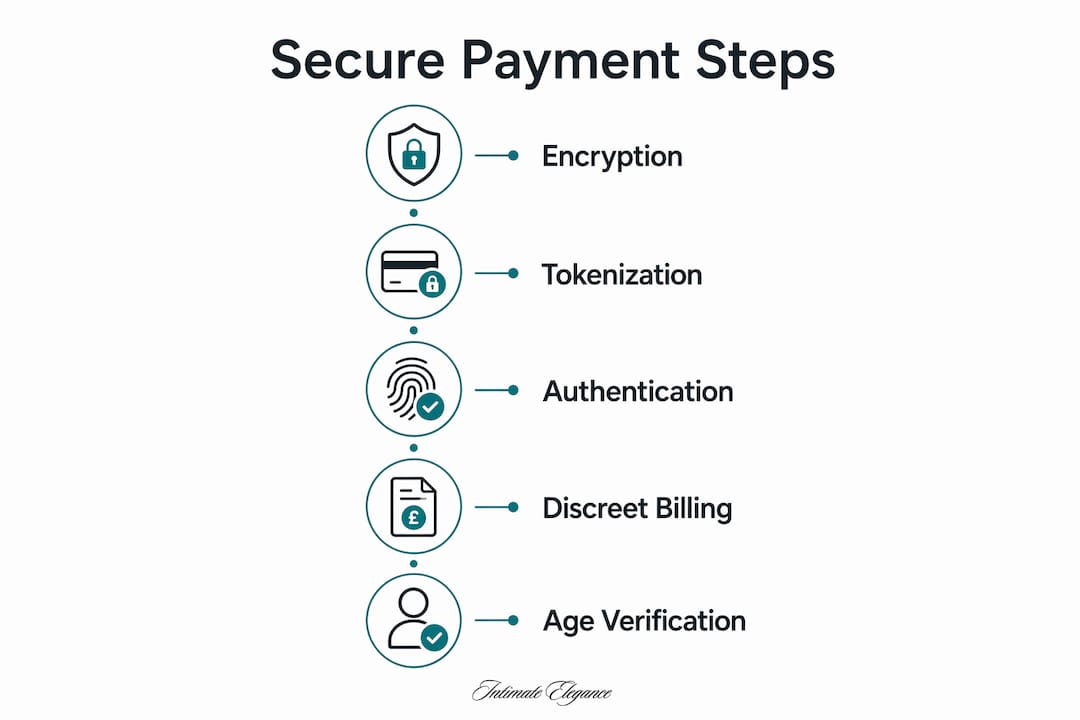
PSD2 requires that all Payment Service Providers operating in the EU and EEA apply Strong Customer Authentication for electronic payments. SCA mandates at least two independent verification factors, typically a password combined with a one-time code sent to your phone. This multi-factor step blocks the majority of account takeover attempts.
Age verification is a further compliance requirement that directly affects payment stability. Chargeback rates fall below 0.5% when retailers use 3DS2 authentication alongside discreet billing, compared to the 0.9–1.8% range seen without these measures. Lower chargebacks mean a more stable merchant account and fewer disruptions to the checkout experience.
Modern fraud prevention goes further still. AI-based fraud engines analyse hundreds of parameters in real time, including IP geolocation, device profile, transaction velocity, and behavioural biometrics. A transaction that looks unusual on any of those dimensions gets flagged or blocked before it completes.
- PCI DSS Level 1: Mandatory for any gateway processing large volumes of card payments; prevents data storage on merchant servers.
- TLS encryption: Protects data in transit; look for the padlock icon in your browser address bar.
- PSD2 SCA: Requires two-factor authentication for EU payments; adds a verification step at checkout.
- 3DS2 authentication: Reduces chargebacks and satisfies acquiring bank requirements for adult retail.
- AI fraud detection: Monitors device, location, and behaviour patterns to block suspicious activity in real time.
Pro Tip: Before completing a purchase, check that the checkout URL begins with “https” and that a padlock icon appears in your browser. These two signals confirm TLS encryption is active.
How does discreet billing reduce risk in adult retail?
Discreet billing is one of the most practical privacy tools in adult ecommerce. Neutral billing descriptors mask the nature of a purchase on bank statements, replacing a recognisable adult brand name with a generic trading name. This single measure prevents a significant proportion of chargebacks caused by family members or housemates seeing an unfamiliar charge and disputing it.

The privacy chain does not end at payment. End-to-end data privacy covers the full arc from checkout to delivery. Retailers who apply privacy by design extend discreet practices to packaging, shipping labels, and even the data collected by product recommendation quizzes on their websites. Each touchpoint is a potential privacy leak if not managed carefully.
GDPR Article 13 makes data minimisation a legal obligation, not a marketing promise. Data minimisation limits what a retailer collects to only what is necessary to complete the transaction. For adult shoppers, this matters enormously. A retailer that stores your purchase history indefinitely creates a record that could surface in contexts you never anticipated.
Discreet billing descriptors are vital for reducing chargebacks caused by family members seeing adult purchase charges on statements and disputing them. Combined with minimal data retention, they form the practical core of privacy protection in adult retail.
Specialised high-risk merchant accounts add a further layer of stability. Generic processors often terminate accounts without warning when they detect adult retail activity. Specialised accounts use tailored underwriting and industry-specific fraud detection, which means fewer sudden payment outages for shoppers mid-checkout. A retailer operating on a specialised account is demonstrably more committed to long-term, stable service.
Customer trust follows directly from these practices. Shoppers who experience discreet billing, fast delivery in plain packaging, and a transparent privacy policy return. Those who encounter an unexpected charge description or a vague data policy do not.
What safe payment methods should you use for adult purchases?
Choosing the right payment method is the single most direct control you have over your own privacy. The following steps give you a practical framework for safer adult retail purchases.
-
Confirm PCI DSS certification. Check the retailer’s payment page or footer for mention of PCI DSS Level 1 compliance. A certified gateway means your card data is tokenised and never stored on the retailer’s server.
-
Verify SSL/TLS before entering card details. Secure checkout indicators such as the padlock icon and an “https” prefix confirm that your data is encrypted in transit. Never enter payment details on a page that lacks these signals.
-
Respond to SCA prompts correctly. When your bank sends a one-time code during checkout, this is PSD2’s Strong Customer Authentication at work. Completing the step protects your account from unauthorised use, not just the retailer’s.
-
Consider crypto wallets or e-wallets for maximum privacy. Crypto payment adult shopping benefits include near-complete transaction anonymity. Crypto payments do not appear on bank statements at all, and e-wallets such as those linked to prepaid cards add a further layer of separation between your identity and the purchase.
-
Read the privacy policy before you buy. A retailer compliant with GDPR Article 13 will state clearly what data it collects, how long it retains it, and whether it shares it with third parties. Vague or absent policies are a warning sign.
-
Use a dedicated email address. A separate email account for adult retail purchases keeps your primary inbox and identity isolated from any potential data breach.
Pro Tip: If you prefer not to use a main credit card, a prepaid virtual card adds a clean separation between your bank account and your adult retail purchase history. Most major banks now offer these through their mobile apps.
For a broader view of how privacy considerations shape the adult shopping experience, the complete 2026 privacy guide from Intimate-elegance covers data minimisation obligations in detail.
What risks do adult retail transactions face, and how are they managed?
Adult retail faces a specific set of transaction risks that standard ecommerce does not encounter at the same frequency. Understanding these risks explains why the security infrastructure around adult retail is more elaborate than in most other sectors.
Friendly fraud is the most common chargeback driver. A cardholder makes a legitimate purchase, then disputes the charge, either because they do not recognise the billing descriptor or because they want to conceal the purchase from someone else in the household. Discreet billing descriptors directly address this, and 3DS2 authentication creates a digital record of consent that makes disputes harder to sustain.
Merchant account instability is a structural risk. Mainstream payment processors may terminate adult merchant accounts without warning, leaving retailers unable to process payments and shoppers unable to complete purchases. Specialised high-risk accounts are built for this sector and carry far lower termination risk.
| Risk | Cause | Mitigation |
|---|---|---|
| Friendly fraud chargebacks | Unrecognised billing descriptor | Discreet billing names, 3DS2 authentication |
| Account termination | Generic processor policy | Specialised high-risk merchant account |
| Data breach | Insecure data storage | PCI DSS tokenisation, TLS encryption |
| Identity exposure | Excessive data collection | GDPR data minimisation, privacy by design |
| Fraudulent transactions | Stolen card use | AI fraud engines, multi-factor authentication |
Age verification compliance reduces legal risk and chargeback exposure simultaneously. Acquiring banks require it, and retailers who implement it properly demonstrate the kind of due diligence that keeps accounts stable and chargebacks low.
Key takeaways
Secure transactions in adult retail require PCI DSS Level 1 certification, discreet billing, GDPR-compliant data minimisation, and PSD2 Strong Customer Authentication working together to protect both privacy and payment safety.
| Point | Details |
|---|---|
| PCI DSS Level 1 is the baseline | Only use retailers whose payment gateways carry this certification to ensure card data is tokenised. |
| Discreet billing prevents chargebacks | Neutral billing descriptors protect your privacy and reduce disputes caused by unrecognised charges. |
| SCA adds a critical identity check | PSD2’s two-factor authentication step at checkout blocks the majority of account takeover attempts. |
| Data minimisation is a legal right | GDPR Article 13 entitles you to retailers that collect only the data necessary to complete your order. |
| Specialised accounts signal stability | Retailers using high-risk merchant accounts are less likely to suffer sudden payment outages mid-purchase. |
Why payment security in adult retail deserves more credit than it gets
I have spent years watching consumers treat privacy banners as a proxy for actual data safety. They are not the same thing. A retailer can display a GDPR consent pop-up and still retain your purchase history for years, share behavioural data with third-party ad networks, and use a billing descriptor that broadcasts exactly what you bought. The banner is compliance theatre. The real protection lives in the infrastructure underneath.
What I find genuinely reassuring about the better adult retailers is that the high-risk classification, which sounds alarming, actually correlates with more rigorous compliance. Specialised payment infrastructure means the retailer has been through a more demanding underwriting process than a standard ecommerce shop. That scrutiny produces better security outcomes for shoppers.
The shift toward crypto and e-wallet payments is the most interesting development I have tracked recently. Crypto payment adult shopping benefits are not just about anonymity. They remove the bank statement entry entirely, which eliminates a whole category of chargeback risk and household privacy concern in one step. Not every shopper wants or needs this, but the option matters.
My honest view is that the retailers worth trusting are the ones who treat discreet billing, minimal data retention, and transparent privacy policies as core product features, not afterthoughts. If a retailer cannot tell you clearly what data it keeps and for how long, that is the answer you need. The discreet shopping workflow guide from Intimate-elegance is one of the cleaner practical resources I have seen on this, covering the full customer journey from checkout to delivery.
— Bartosz
Shopping securely at Intimate-elegance
Intimate-elegance is built around the principle that privacy and pleasure belong together. Every transaction on the platform processes through PCI DSS Level 1 certified payment methods, with tokenisation ensuring your card data never sits on the retailer’s servers. Billing descriptors are discreet by default, and all orders ship in plain, unmarked packaging across the EU.
Whether you are browsing vibrators and stimulators for the first time or adding to an existing collection, every purchase is backed by the same secure payment infrastructure and privacy-first approach. The Intimate-elegance catalogue covers premium lingerie, couples’ devices, and solo pleasure products, all available with fast, anonymous EU-wide delivery.
FAQ
What is PCI DSS Level 1 and why does it matter for adult retail?
PCI DSS Level 1 is the highest payment card security standard, requiring tokenisation and strict data handling controls. Adult retailers using Level 1 certified gateways never store your raw card details on their servers.
What is a discreet billing descriptor?
A discreet billing descriptor is a neutral trading name that appears on your bank statement instead of the retailer’s recognisable brand. It protects your privacy and prevents chargebacks from unrecognised charges.
Is it safe to use a credit card for adult retail purchases online?
Yes, provided the retailer uses a PCI DSS certified gateway and TLS encryption. Verify the padlock icon in your browser and complete any SCA verification step your bank requests.
What are the benefits of using crypto for adult purchases?
Crypto payments do not appear on bank statements, providing near-complete transaction anonymity. They also eliminate the risk of chargebacks driven by unrecognised billing descriptors.
How do I know if an adult retailer handles my data responsibly?
Look for a clear privacy policy that states what data is collected, how long it is retained, and whether it is shared with third parties. GDPR Article 13 requires this transparency from any retailer operating in the EU.
Recommended
- Privacy in adult shopping: your complete 2026 guide – Intimate Elegance
- Secure sex toy buying steps for discreet, quality pleasure – Intimate Elegance
- Discover the real benefits of buying adult products online – Intimate Elegance
- Discreet pleasure shopping workflow: your 2026 guide – Intimate Elegance