

What is the adult product market: a 2026 guide
TL;DR:
- The adult product market is a rapidly growing, complex sector valued at $42.5 billion in 2024 and expanding through diverse categories. Consumer demand is increasingly driven by sexual wellness, privacy, and innovative technology, shifting away from entertainment towards health and self-care. E-commerce’s discreet, secure infrastructure plays a crucial role in expanding accessibility and accelerating industry growth.
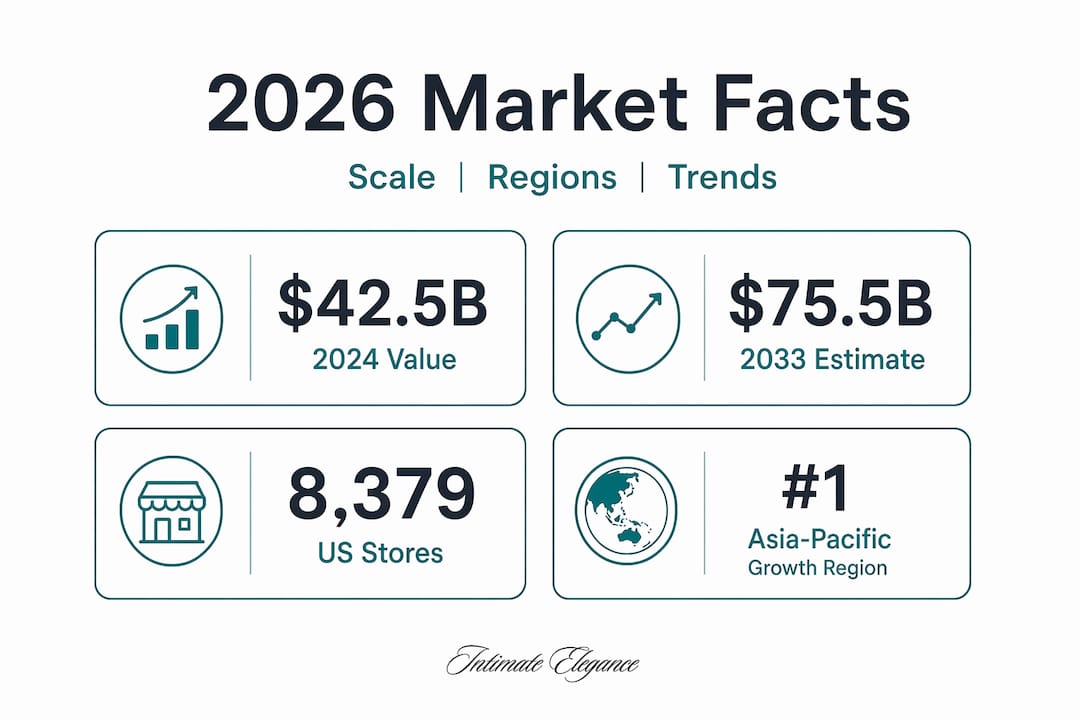
Few industries attract as much misunderstanding as the adult product market. Valued at $42.5 billion globally in 2024 and forecast to reach $75.5 billion by 2033, this is not a niche or underground economy. It is a structured, segmented, and rapidly growing consumer goods sector that spans physical retail, e-commerce, digital content, and sexual wellness. Yet misconceptions persist about what the market actually includes, who buys, and what drives demand. This guide cuts through the noise with data, clear definitions, and a frank look at where the industry is heading.
Table of Contents
- Key takeaways
- What is the adult product market
- Market size and growth: the numbers
- Consumer behaviour and purchase motivations
- Distribution channels and the privacy factor
- My take: what the market analysis often misses
- Explore adult products with total discretion
- FAQ
Key takeaways
| Point | Details |
|---|---|
| Market scale is significant | The global adult product market was worth $42.5B in 2024, growing at 7.5% CAGR through 2033. |
| Segmentation is complex | The market spans physical goods, digital content, and wellness products, making direct comparisons between reports tricky. |
| Privacy drives e-commerce growth | Discreet packaging and secure payment are disproportionate drivers of online adult product sales. |
| Wellness reframing reshapes demand | Consumers increasingly view adult products through a sexual wellness lens, not purely as entertainment. |
| Technology accelerates product innovation | App-controlled devices and ergonomic materials are expanding the market and attracting new consumer segments. |
What is the adult product market
The adult product market refers to the commercial ecosystem of goods and services designed for adult sexual pleasure, wellness, intimacy enhancement, and related personal use. It is broader than most people assume. The market is not limited to sex toys or explicit content. It encompasses lingerie, lubricants, contraceptives, intimate apparel, sexual health supplements, couples’ accessories, and adult digital content platforms.
Understanding the full scope requires looking at how the industry is classified. In the United States, for example, the North American Industry Classification System (NAICS) separates physical adult retail stores from adult and pornographic websites into distinct categories. This matters because industry segmentation inconsistencies across reports mean that market size figures can look very different depending on what each analyst includes or excludes. Researchers comparing two separate reports on the adult product industry must confirm whether both are measuring the same categories before drawing conclusions.
The product categories typically included in a broad adult market analysis are:
- Physical pleasure products: vibrators, stimulators, couples’ devices, bondage accessories
- Intimate apparel and lingerie: including luxury, fashion, and functional categories
- Sexual health and wellness products: lubricants, contraceptives, intimate hygiene
- Digital and subscription content: adult websites, streaming platforms, interactive content
- Enhancement supplements: products marketed for libido, performance, or hormonal support
Distribution channels add another layer of segmentation. Sales occur through dedicated adult retail stores, general health and beauty retailers, pharmacies, online marketplaces, and direct-to-consumer brand websites. Each channel serves a different consumer profile and carries distinct implications for privacy, product range, and pricing.
| Segment | Examples | Typical channel |
|---|---|---|
| Pleasure products | Vibrators, stimulators, couples’ toys | Online, adult retail |
| Intimate apparel | Lingerie, bodywear, accessories | Online, fashion retail |
| Sexual health products | Lubricants, contraceptives | Pharmacy, online |
| Digital content | Subscriptions, streaming platforms | Online only |
| Wellness supplements | Libido support, personal care | Health retail, online |
Market size and growth: the numbers
The adult product industry is growing at a rate that rivals mainstream consumer goods sectors. The global market was valued at $42.5B in 2024, with a projected compound annual growth rate of 7.5% between 2026 and 2033. That trajectory would take the market to $75.5 billion within a decade.

In the United States alone, the adult stores sector generated $15.7 billion in 2026 across approximately 8,379 registered businesses, reflecting a 4.9% CAGR between 2020 and 2025. Separately, the U.S. adult and pornographic websites industry contributed $2.6 billion in 2026, generated predominantly through subscriptions and advertising, with 70 to 80% of site visits now originating from mobile devices.
Regional breakdowns reveal where growth is concentrated. North America leads in reported market maturity, but the Asia-Pacific region is growing fastest, driven by rising disposable incomes and rapid e-commerce infrastructure expansion. Europe represents a large and increasingly open market, with shifting social attitudes in Western nations making adult product purchases progressively more normalised.
Pro Tip: When comparing adult market analysis reports, always check the category definitions first. A report covering only physical sex toys will show a drastically different market size from one that includes digital subscriptions and contraceptives. The difference is not inaccuracy; it reflects variation in category scope.
Technological advances are a meaningful growth catalyst. Smart app-controlled devices, ergonomic material improvements, and products designed with safety certifications have attracted consumers who might previously have dismissed the category. Rising disposable incomes and greater sexual wellness awareness have also expanded the pool of active buyers well beyond early-adopter demographics.
Consumer behaviour and purchase motivations
What drives adult product demand? The answer has shifted meaningfully over the past decade. Wellness is now the dominant framing for a growing share of consumers. Buyers are less likely to describe purchases purely in terms of entertainment and more likely to frame them around self-care, relationship health, and physical wellbeing. Exploring the sexual wellness benefits of adult products has become part of a broader conversation about holistic health.
Several distinct motivations shape purchase decisions across the market:
- Relationship enhancement: Couples seeking to deepen intimacy and explore new experiences together represent one of the largest and most consistent buying segments.
- Personal wellness and exploration: Solo buyers motivated by self-knowledge, stress relief, or physical health, particularly those exploring evidence-backed benefits of sex toys.
- Novelty and curiosity: First-time buyers prompted by destigmatisation, media coverage, or social conversations about sexual wellness.
- Medical and therapeutic use: A smaller but growing segment purchasing on clinical recommendation or for specific health-related outcomes.
Privacy remains a defining concern. Discreet packaging and secure payment reduce the stigma associated with purchasing, making online shopping significantly more accessible to consumers who would not enter a physical adult store. This is especially important in markets where social acceptance is still developing.
Pro Tip: For researchers analysing consumer trends in adult products, separating “wellness-motivated” buyers from “entertainment-motivated” buyers is increasingly important. The two segments respond to different marketing, packaging, and price signals, and conflating them skews both product development strategy and demand forecasting.
The shift from impulse buying to researched purchasing is also notable. As the market matures and product complexity increases, particularly with app-connected devices and premium materials, consumers invest more time in product research before committing. Review platforms, editorial content, and brand transparency play an outsized role in this category compared to fast-moving consumer goods.
Distribution channels and the privacy factor
How and where adult products are sold has as much impact on market growth as what is being sold. The contrast between physical retail and e-commerce in this sector is more pronounced than in almost any other consumer goods category.
Brick-and-mortar adult retail stores offer tactile product experience and immediate availability. However, they require consumers to overcome significant privacy barriers. The visibility of entering a specialist retail store, the presence of other customers, and the absence of anonymity deter a large proportion of potential buyers, particularly in smaller communities or more conservative regions.
E-commerce removes nearly all of these barriers. The steps that make online adult product shopping successful are worth understanding in sequence:
- Anonymous browsing: Consumers research products without any public visibility or interaction with sales staff.
- Secure checkout: Encrypted payment systems and payment descriptions that do not reference the product category protect financial privacy.
- Discreet delivery: Plain, unbranded packaging with neutral sender information is the single most frequently cited feature by first-time buyers.
- Post-purchase discretion: Billing statement descriptions that do not identify the retailer or product type complete the privacy loop.
Channel strategy in adult retail is a disproportionate driver of sales success compared to other consumer goods sectors. A product that performs moderately in physical retail can become a bestseller online simply because the purchase barrier has been removed. The real benefits of buying online extend beyond convenience to fundamental shifts in who feels comfortable buying at all.
This dynamic helps explain why e-commerce penetration in the adult product market has grown faster than in comparable consumer goods categories. Anonymity and discreet packaging are not simply logistics features. They are primary demand drivers that determine whether a consumer converts or abandons the purchase entirely.
My take: what the market analysis often misses
I’ve spent years reading adult market analysis reports and watching how researchers and brands interpret the data. What I keep seeing is a tendency to treat this market as just another consumer goods category with a stigma overlay. That framing misses something important.
What I’ve found is that the sexual wellness reframing is not cosmetic. It is structurally changing which consumers engage with the market, how products are developed, and how brands communicate. When a consumer frames a purchase as part of their health routine rather than as entertainment, their price sensitivity drops, their brand loyalty increases, and their likelihood of buying again rises sharply. That is a fundamentally different commercial dynamic.
In my experience, the privacy infrastructure around adult product purchases is also underappreciated in standard consumer analysis. Researchers tend to note it as a challenge. What I’d argue is that it is actually the market’s most important structural enabler. The growth of discreet shopping experiences has done more to expand the actual buyer base than any change in social attitudes. Attitude change may be necessary, but it is privacy that converts intention into purchase.
The most interesting trend I see heading into the late 2020s is the convergence of sexual wellness, connected technology, and mainstream health positioning. Smart devices with health tracking integrations, brands partnering with medical professionals, and premium materials marketed with the same language used in luxury skincare. This is not speculation. The product development pipeline already reflects it. The market is not growing because people are becoming less inhibited. It is growing because the infrastructure and framing have finally caught up with demand that was always there.
— Bartosz
Explore adult products with total discretion
If this overview has prompted you to think about what quality adult products actually look like in practice, Intimate-elegance offers exactly the kind of curated, privacy-first experience the market data points to.
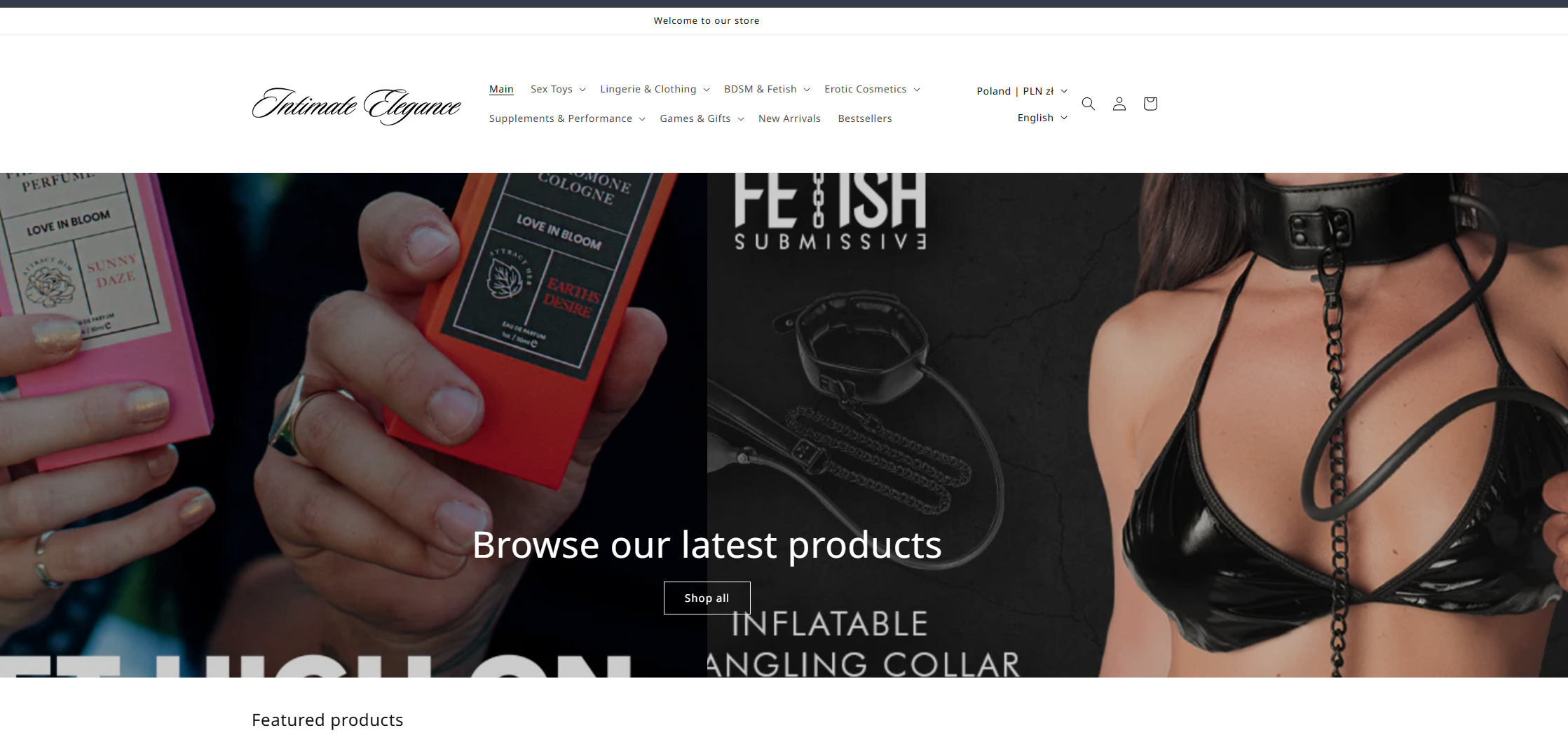
Intimate-elegance stocks premium vibrators, couples’ accessories, lingerie, and stimulators, all selected for quality, material safety, and design. Every order ships EU-wide in plain, unbranded packaging with discreet billing. There are no identifying marks anywhere in the delivery process. Browsing the catalogue is entirely private, and the Coquette Chic Desire Lace Mask is a strong example of the elegant, well-crafted products you will find throughout the store. For anyone looking to understand the market from the inside out, exploring what adult toys offer for intimacy is a natural starting point.
FAQ
What does the adult product market include?
The adult product market covers sex toys, lingerie, lubricants, contraceptives, sexual health supplements, couples’ accessories, and adult digital content platforms. Market reports vary in which categories they include, so size figures differ considerably between sources.
How large is the adult product market globally?
The global adult products market was valued at $42.5 billion in 2024 and is projected to reach $75.5 billion by 2033, growing at a 7.5% CAGR. Regional figures vary depending on whether digital content is included.
What drives adult product demand?
Key demand drivers include growing sexual wellness awareness, rising disposable incomes, greater social acceptance, and e-commerce features such as discreet delivery and secure payment that reduce purchase barriers significantly.
Why do adult product market reports show such different figures?
Segmentation inconsistencies between reports are the primary cause. Some include only physical retail, others add digital subscriptions, and others incorporate contraceptives and wellness supplements. Comparing definitions before comparing numbers is the only reliable approach.
Is e-commerce the dominant channel in this market?
E-commerce is the fastest-growing channel in the adult product industry, primarily because anonymity, discreet packaging, and secure checkout remove barriers that physical retail cannot address. This makes online distribution a structural growth driver, not simply a convenience feature.
Recommended
- Why shop adult products in 2026: Wellness, privacy and intimacy – Intimate Elegance
- Discover the real benefits of buying adult products online – Intimate Elegance
- What is elegant adult shopping: a guide for EU adults – Intimate Elegance
- How to gift adult toys for intimacy: expert guide – Intimate Elegance