

How to maintain sex toys: hygiene and longevity made simple
TL;DR:
- Neglecting proper cleaning and storage of sex toys can lead to bacterial growth and safety hazards. Regular maintenance with appropriate supplies and techniques prolongs their lifespan and ensures safe use. Consistent care reflects respect for your health and enhances your pleasure over time.
Neglecting your sex toys is more than a hygiene oversight. Toys that aren’t cleaned and stored correctly can harbour bacteria, develop mould, or degrade in ways that make them genuinely unsafe to use. The good news is that proper maintenance doesn’t require specialist knowledge or expensive equipment. With the right information and a few simple habits, you can keep your collection in excellent condition for years, protecting both your health and your investment.
Table of Contents
- Understanding materials and what you need
- Step-by-step cleaning routine for every use
- Deep cleaning and special maintenance
- Common mistakes and troubleshooting
- Why a little care goes a long way: our take on sex toy maintenance
- Discover quality and care at Intimate Elegance
- Frequently asked questions
Key Takeaways
| Point | Details |
|---|---|
| Material matters | Different materials need specific care to maintain safety and quality. |
| Routine is essential | Cleaning after every use prevents bacteria and extends your toy’s life. |
| Deep cleaning prevents problems | Occasional deep cleans help keep toys fresh and remove stubborn odours. |
| Avoid common mistakes | Don’t mix incompatible materials or neglect drying to reduce risks. |
Understanding materials and what you need
Now that the need for maintenance is clear, let’s look at what materials you may encounter and what supplies you’ll need.
The material of your sex toy isn’t just a design choice. It determines how you clean it, how long it lasts, and how safe it is. Different sex toy materials require distinct cleaning methods for safety and durability, so identifying what you own is the first practical step.
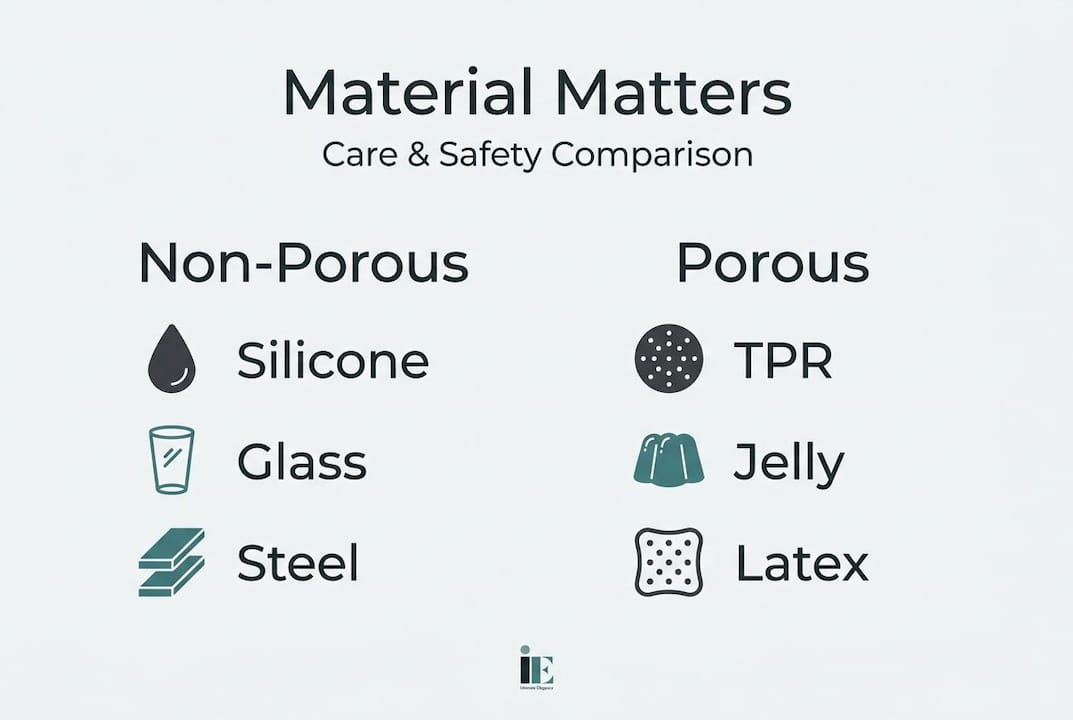
Here’s a quick overview of the most common materials you’ll encounter:
| Material | Porous or non-porous | Boilable | Body-safe rating |
|---|---|---|---|
| Medical-grade silicone | Non-porous | Yes | Excellent |
| Borosilicate glass | Non-porous | Yes | Excellent |
| Stainless steel | Non-porous | Yes | Excellent |
| ABS plastic | Non-porous | No | Very good |
| Jelly/PVC | Porous | No | Poor |
| TPE/TPR | Porous | No | Moderate |
Non-porous materials such as silicone, glass, and metal do not absorb bacteria or moisture into their surface. This makes them significantly easier to clean thoroughly and much safer for repeated intimate use. Porous materials, such as jelly or TPE, trap bacteria even after cleaning, which is why best sex toy materials guides consistently recommend prioritising non-porous options where possible.
Once you know your material, gather the following supplies:
- Mild, unscented soap or a dedicated toy cleaner formulated at a neutral pH
- Warm water for rinsing (avoid very hot water on electronic components)
- Soft lint-free cloths or microfibre towels for drying without scratching
- Individual storage pouches or boxes to keep toys separated and dust-free
- Toy cleaner spray for quick cleans between thorough washes
- Boiling pot or sterilising solution for non-motorised non-porous toys
Having these items ready before you need them removes any excuse to skip cleaning. Convenience is one of the biggest factors in whether a cleaning routine actually gets maintained long-term.
Step-by-step cleaning routine for every use
With your materials identified and supplies ready, here’s exactly how to clean your sex toys safely after use.
Regular, thorough cleaning is essential for safe and enjoyable use. Think of it like washing your hands: non-negotiable, quick once you’re in the habit, and something you’ll appreciate having done.
Follow these steps after every single session:
- Rinse immediately. Run the toy under warm water as soon as possible after use. This removes the bulk of fluid and makes the rest of the cleaning easier. Don’t let residue dry on the surface.
- Apply your cleaner. Use a small amount of mild, unscented soap or dedicated toy cleaner. Lather gently with your fingers or a soft cloth. Avoid harsh antibacterial soaps, which can dry out silicone over time.
- Clean all surfaces thoroughly. Pay particular attention to ridges, bumps, seams, and any textured sections where bacteria can hide. For toys with suction cup bases, clean around the edge of the cup carefully.
- Rinse completely. Rinse until all soap residue is gone. Soap left on the surface can cause irritation during the next use.
- Pat dry. Use a clean lint-free cloth or leave the toy on a clean towel to air dry fully before storing. Never store a damp toy.
- Store separately. Place the dry toy in its own pouch or box. Keep it away from direct sunlight, which degrades silicone and fades colour over time.
Pro Tip: For 100% silicone, glass, or stainless steel toys without motors, you can boil them in water for three minutes to fully sterilise them. This is particularly useful if you share toys with a partner, as it eliminates any risk of transferring bacteria or STIs.
For motorised or battery-operated toys, never submerge them unless the packaging explicitly states they are fully waterproof. Instead, use a damp cloth with toy cleaner and wipe them down carefully, then rinse the cloth and wipe again.
“The single most important step in toy care is consistency. Cleaning once in a while isn’t enough. After every use, every time, is what keeps your toys genuinely safe.”
Material-specific reminders: Jelly and TPR toys should ideally be used with a condom to reduce direct exposure to the porous surface, and replaced more frequently than non-porous alternatives. Consult our toy cleaning guide for a full material-by-material breakdown.
Deep cleaning and special maintenance
Daily cleaning covers the basics, but some situations require more attention for deep cleanliness.
Deep cleaning extends the life of your device and prevents bacterial growth that standard surface cleaning may miss. Plan for a deep clean in the following situations:
- Monthly, regardless of how frequently you use a toy
- After sharing with a partner, even if you used a condom
- After any illness, particularly anything affecting your immune system
- After a toy has been stored for a long time without use
Here’s how deep cleaning differs from your regular routine:
| Situation | Regular clean | Deep clean |
|---|---|---|
| Frequency | After every use | Monthly or as needed |
| Method | Soap and warm water | Boiling, sterilisation solution, or UV cleaner |
| Focus | Surface residue | Hidden bacteria in seams and texture |
| Drying time | Air dry (30 minutes) | Full air dry (1 to 2 hours) |
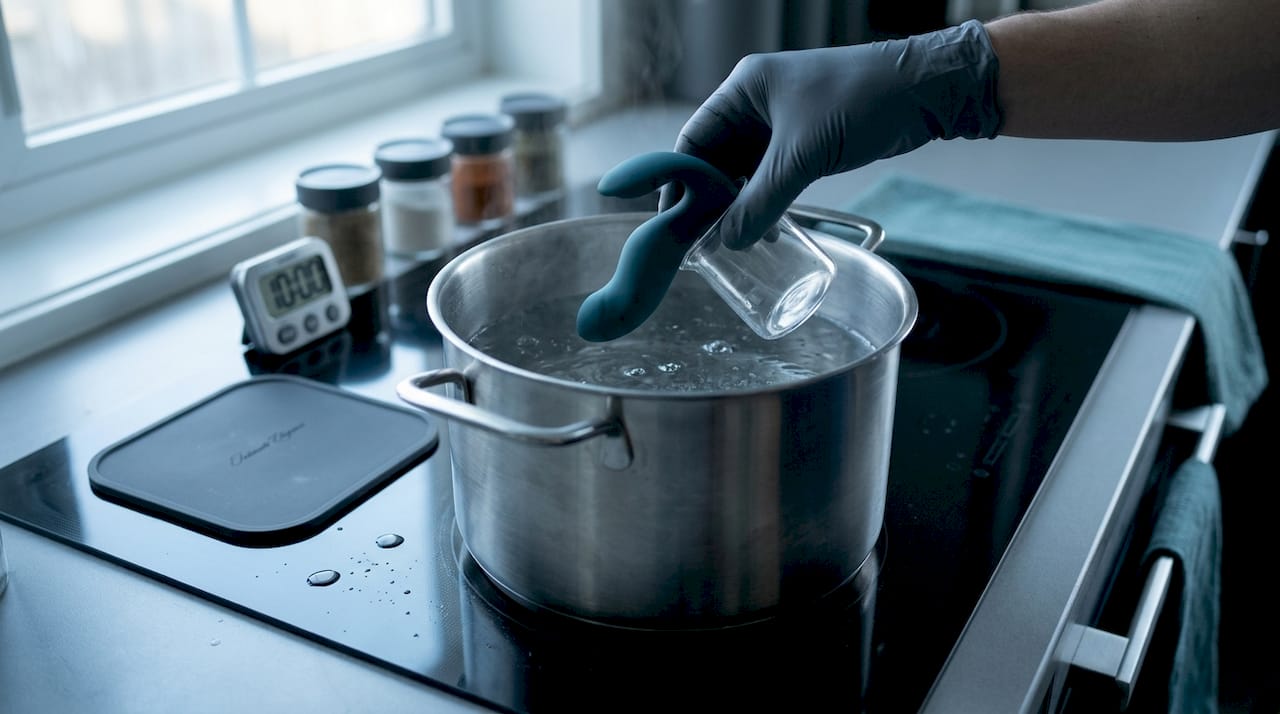
For non-motorised silicone, glass, or stainless steel toys, boiling remains the gold standard for deep sterilisation. Place the toy in boiling water for three to five minutes, then remove carefully with tongs and allow it to cool on a clean surface.
For electronic toys, use a UV sanitiser box. These devices use ultraviolet light to kill bacteria without moisture or heat, making them ideal for anything with a motor or charging port. They’re especially worth the investment if you use your toys frequently or share them.
Addressing odours is another area where deep cleaning helps. Persistent odours on non-porous toys often mean the surface hasn’t dried fully before storage. A solution of one part white vinegar to three parts water can neutralise odours when used as a final rinse, followed by a thorough freshwater rinse. For porous toys with persistent odours, replacement is the safest option.
Pro Tip: Store toys with a small sachet of silica gel in their pouch. This absorbs residual moisture and significantly reduces the risk of mould forming during storage, particularly in humid climates or during summer months.
Long-term storage considerations matter too. If you’re putting a toy away for more than a few weeks, remove batteries to avoid corrosion, ensure the toy is completely dry, and keep it in a cool, dark place. Silicone can degrade under UV exposure over time, so a drawer or opaque box is preferable to a clear container left near a window. Our adult toy maintenance tips go into further detail on long-term storage best practices.
Common mistakes and troubleshooting
Even the best routines are vulnerable to little mistakes. Here’s what to avoid and how to resolve problems when they arise.
Incorrect cleaning can damage your toy or compromise safety in ways that aren’t always immediately visible. The most common maintenance mistakes include:
- Using silicone-based lubricants on silicone toys. Silicone lubricant bonds with silicone material, causing the surface to break down over time. Always use water-based lubricant with silicone toys.
- Skipping the drying step. Storing a toy while still damp is one of the fastest ways to encourage mould growth, particularly in the seams and motor housing.
- Keeping toys in plastic bags. Standard plastic bags trap moisture and can cause chemical reactions with certain toy materials, leading to surface degradation. Always use fabric pouches or dedicated toy boxes.
- Cleaning toys together in a communal rinse. Different materials can react with each other when in prolonged contact. Store and rinse toys separately.
- Using harsh cleaning products. Bleach, acetone, or antibacterial wipes containing alcohol can strip the surface coating of toys, making them porous and unsafe. Stick to purpose-made cleaners.
- Ignoring wear and discolouration. Surface cracks, sticky or tacky textures, and unusual discolouration are signs that a toy is degrading and may no longer be safe to use.
Pro Tip: Do a quick visual inspection every time you clean your toy. Run a finger across the surface to check for tackiness (a sign of silicone degradation) and look for any cracks or chips in glass or plastic toys. Catching issues early protects your health.
When it comes to motor issues, water damage is the most common culprit. If a previously waterproof toy stops working after submersion, it may have developed a faulty seal. Allow it to dry completely for 48 hours in a warm place before attempting to use it again. If it still fails, it’s time to retire it.
Knowing when to replace a toy is a question of sex toy safety tips that many people overlook. If a toy shows cracks, surface tackiness, persistent odour after deep cleaning, or discolouration that won’t shift, retire it. No toy is worth a skin reaction or infection. When choosing safe sex toys as a replacement, prioritising non-porous, body-safe materials from reputable brands will mean your next purchase lasts far longer.
Why a little care goes a long way: our take on sex toy maintenance
Having explored the what, how, and why of sex toy maintenance, let’s reflect on the wider benefits our experience reveals.
Most people think of toy maintenance as a chore. A necessary inconvenience sandwiched between the pleasure and putting things away. We’d argue that perspective undersells what regular care actually does for you.
When you look after your toys properly, you’re practising a quiet but meaningful form of self-respect. You’re saying that your health matters, that your pleasure matters, and that the things you use intimately deserve the same attention you’d give anything else you value. That shift in mindset has a surprisingly real effect on how confident and at ease you feel during intimate moments.
There’s also a practical truth that our experience confirms repeatedly: toys maintained with even modest, consistent care last dramatically longer than those left uncleaned or stored carelessly. We’ve seen quality silicone vibrators maintain their texture and motor performance for five or more years with proper upkeep. The same product neglected might start degrading within twelve months. Routine care transforms the longevity you get from your toys, and over time that adds up to a genuinely significant saving.
The most overlooked maintenance habit is simply paying attention. A quick inspection, a two-minute clean, and thoughtful storage take almost no effort once they become part of your routine. Yet they protect you from health risks, preserve the quality of your experience, and extend the life of products you’ve invested in. For anyone looking to go deeper into how this works in practice, our more maintenance insights resource is worth bookmarking.
The bottom line: maintenance isn’t about fear of getting it wrong. It’s about respecting yourself enough to get it right.
Discover quality and care at Intimate Elegance
If you’re ready to invest in high-quality and low-maintenance toys, Intimate Elegance can help.
At Intimate Elegance, our curated collection is built around products made from the safest, easiest-to-maintain materials available. From premium medical-grade silicone vibrators to borosilicate glass and stainless steel designs, every product in our range is selected with longevity and hygiene in mind.

We also stock dedicated toy cleaners, storage pouches, and accessories that make your maintenance routine as effortless as possible. Whether you’re building a new collection or caring for existing favourites, our discreet EU-wide shipping means everything arrives safely and privately at your door. Browse our full selection and find products that reward a little care with years of pleasure.
Frequently asked questions
How often should I clean my sex toys?
Clean your sex toys after every single use to maintain hygiene and prevent bacterial growth. Waiting until the next use or cleaning only occasionally is not sufficient to keep your toys genuinely safe.
Which cleaning supplies are safe to use on all toys?
Mild, unscented soap and warm water are generally safe for non-porous toys, though distinct cleaning methods apply depending on the material. Always check the manufacturer’s care instructions before using any cleaner.
How do I clean electronic or battery-operated toys safely?
Wipe electronic toys with a damp cloth and an appropriate cleaner, and avoid submerging them unless the packaging confirms full waterproofing. A UV sanitiser box is an excellent investment for motorised toys.
Can I store different sex toys together?
It’s best to store toys separately in individual pouches to avoid material reactions and maintain hygiene. Some materials react when in prolonged contact, causing surface degradation that shortens their lifespan.
When should I replace my sex toys?
Replace any toy that shows signs of damage such as cracks, tacky texture, persistent odour after cleaning, or visible discolouration. No amount of cleaning can make a degraded toy safe to use.
Recommended
- Sex toy cleaning guide: hygiene, safety and longevity – Intimate Elegance
- Top sex toy safety tips to enhance pleasure and health – Intimate Elegance
- Sustainable sex toys: Your 2026 guide to eco-friendly intimacy – Intimate Elegance
- How to choose sex toys for a safe and luxurious experience – Intimate Elegance