

Role of education in pleasure shopping
TL;DR:
- Education enhances consumer confidence, trust, and safety in adult wellness shopping. Discreet packaging, peer reviews, and transparent ingredient information effectively reduce stigma and support informed decisions. Consumers who research thoroughly report higher satisfaction and healthier buying behaviors.
Education is the single most powerful factor shaping confident, safe, and satisfying adult retail decisions. The role of education in pleasure shopping goes far beyond knowing what a product does. It determines whether a shopper trusts a brand, understands ingredient safety, and feels comfortable completing a purchase at all. The adult wellness market has shifted decisively toward health-conscious, informed buying, and consumers who arrive with product knowledge spend more deliberately and report greater satisfaction. Intimate-elegance recognises this shift and builds educational content directly into the shopping experience.
How education builds product knowledge and reduces stigma
Product knowledge is the foundation of confident pleasure shopping. Consumers who understand material safety and ingredient transparency make better choices and experience far less post-purchase regret. Without that knowledge, shoppers default to price or packaging as proxies for quality, which rarely serves them well.
Stigma is the other side of the same problem. Research on Gen Z consumers shows that perceived stigma is the strongest inhibitor of positive purchase attitudes toward sexual wellness products. That finding matters because stigma does not disappear on its own. Education actively dismantles it by replacing shame with factual, practical information.
Sexual shame compounds the problem further. Data from 294 participants shows that sexual shame reduces efficacy assessments, which in turn lowers active information-seeking behaviour. Shoppers who feel ashamed are less likely to research products, which means they remain uninformed and more vulnerable to poor purchasing decisions.
Three educational strategies consistently reduce stigma in adult retail:
- Ingredient and material guides. Clear explanations of body-safe silicone, ABS plastic, and phthalate-free certifications give shoppers a concrete framework for evaluating products rather than relying on guesswork.
- Discreet packaging information. Research confirms that discreet packaging facilitates positive purchase attitudes, with a beta coefficient of .168. Knowing a product arrives in plain, unmarked packaging removes a significant psychological barrier.
- Peer-led content and reviews. Electronic word-of-mouth carries a beta of .401 in facilitating positive attitudes toward sexual wellness purchases. Real consumer voices normalise the experience far more effectively than brand-led messaging alone.
Pro Tip: Before purchasing any adult toy, check the product description for explicit material listings. If a retailer cannot name the materials used, treat that as a red flag and look elsewhere.
What educational formats work best for pleasure shopping?
Not all education lands equally. The format and the messenger both determine whether information actually changes behaviour.

The strongest evidence comes from peer-led models. A large-scale cluster trial found that near-peer education produces 40% greater behaviour change than government-led or teacher-led approaches on sensitive subjects. That gap is significant. It means a trusted peer sharing their experience with a product or category outperforms a formal expert briefing in almost every measurable way.
For pleasure shopping specifically, the most effective educational formats rank as follows:
- Peer reviews and community content. Authentic, detailed reviews from real consumers carry the highest credibility. They address practical concerns, describe actual sensations, and flag issues that brand copy never would.
- Expert-authored blog content. Long-form guides on topics such as choosing sex toys safely build trust when written by credible voices with clear expertise. Vague, generic articles do the opposite.
- Video tutorials and usage guides. Visual demonstrations of how a product works reduce anxiety around unfamiliar items. They also address the practical questions that written descriptions often miss.
- In-store or live-event education. Workshops and in-person demonstrations create a safe space for questions, but they reach a far smaller audience than digital content and carry higher stigma risk for attendees.
- Digital literacy support. Research from a Kenyan e-commerce study found that direct experience combined with education significantly boosts consumer confidence and purchase intention online. Helping shoppers navigate platforms confidently is itself a form of education.
The messenger matters as much as the medium. Credible, relatable voices, whether near-peers or recognised wellness experts, consistently outperform anonymous or institutional sources. Education must also extend beyond product facts. As sexual wellness education specialists note, effective content covers language of boundaries and consent, not just biology or product specifications.
How education shapes consumer behaviour and trust
The consumer journey in adult wellness retail is longer and more research-intensive than in most other product categories. Health buyers in sexual wellness spend weeks researching ingredients, safety records, and brand credibility before committing to a purchase. That extended research phase is not hesitation. It is education in action.
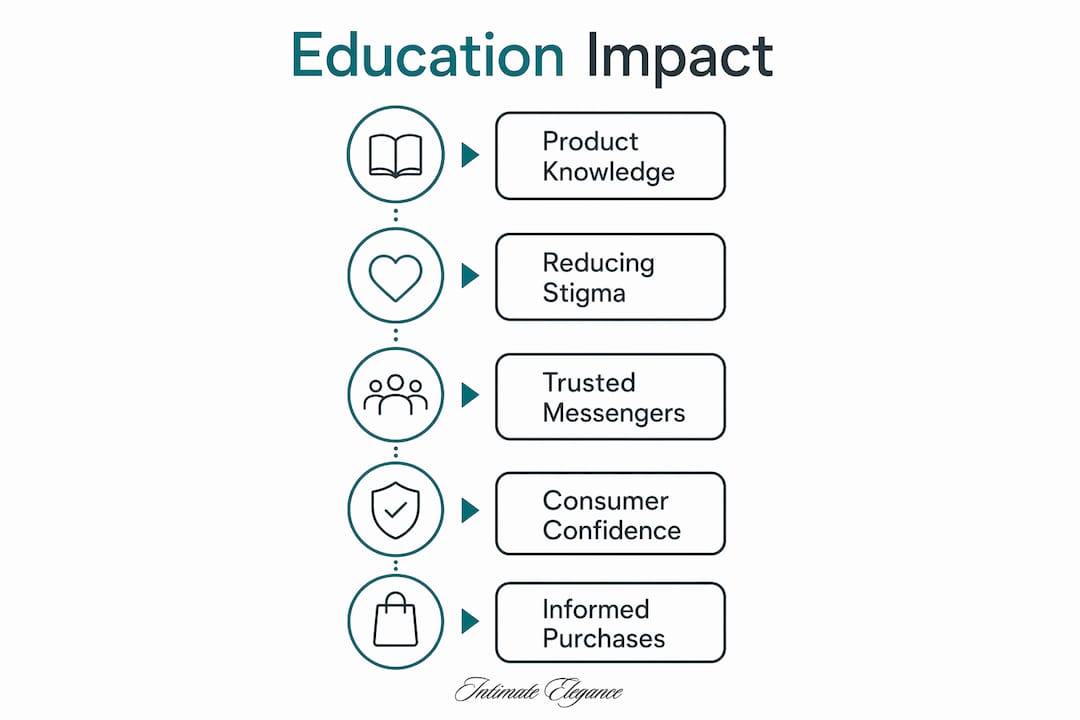
The shift this creates in consumer psychology is fundamental. Without education, shoppers buy on impulse, driven by novelty or price. With education, the mindset moves to risk mitigation. Consumers ask different questions: Is this material body-safe? Does this brand publish third-party testing? What do verified buyers say about durability?
| Buying mindset | Key driver | Education’s role |
|---|---|---|
| Impulse buying | Price or novelty | Absent or minimal |
| Risk-aware buying | Safety and ingredients | Moderate; focused on red flags |
| Trust-based buying | Brand credibility and transparency | High; multi-stage research |
| Wellness-aligned buying | Personal values and self-care goals | Deep; ongoing learning |
Privacy is a major motivator for engaging with educational content online. Privacy concerns drive shoppers toward platforms that allow discreet research and checkout without social exposure. This means that educational content hosted on a discreet, well-designed platform reaches consumers who would never walk into a physical shop or ask a friend for advice.
Pro Tip: Use incognito browsing when researching adult products if privacy is a concern. Reputable platforms like Intimate-elegance also offer anonymous EU-wide shipping, which removes the final barrier for many shoppers.
Brand credibility is built through educational transparency. Consumers increasingly demand detailed, trustworthy content about ingredients and safety, treating adult wellness purchases with the same scrutiny they apply to luxury skincare. Brands that provide this content earn loyalty. Those that do not lose shoppers to those that do.
Practical ways to use education in your pleasure shopping
Knowing that education matters is one thing. Applying it to your actual shopping decisions is another. These steps make the process concrete.
- Verify material safety before you buy. Look for explicit mentions of body-safe silicone, medical-grade materials, or phthalate-free certification. A guide to safe toy materials is a useful starting point for understanding what those terms actually mean.
- Read verified reviews, not just star ratings. A four-star average tells you little. A detailed review explaining texture, noise level, and battery life tells you whether a product suits your specific needs.
- Use educational content to set your baseline. Before browsing products, spend ten minutes reading a category guide. Knowing the difference between a clitoral stimulator and a vibrator, for example, prevents you from buying the wrong product entirely.
- Assess brand transparency as a trust signal. Brands that publish ingredient lists, explain their testing processes, and offer clear return policies are signalling that they stand behind their products. Brands that obscure this information rarely do.
- Overcome stigma-related hesitation with privacy tools. Discreet platforms, anonymous shipping, and private browsing all reduce the social exposure that stigma feeds on. Using these tools is not avoidance. It is a practical way to access education and products on your own terms.
- Align purchases with your wellness goals. Education helps you articulate what you actually want from a product, whether that is stress relief, improved intimacy with a partner, or physical pleasure. That clarity makes every purchase more satisfying and less likely to disappoint.
- Maintain products correctly after purchase. An adult toy maintenance guide covers cleaning, storage, and longevity. Proper care is part of the educated consumer’s toolkit, not an afterthought.
Key takeaways
Education transforms pleasure shopping from uncertain impulse buying into a deliberate, health-conscious process built on product knowledge, trust, and personal values.
| Point | Details |
|---|---|
| Stigma is the primary barrier | Perceived stigma is the strongest inhibitor of purchase attitudes; education and discreet packaging directly reduce it. |
| Peer-led content outperforms expert-led | Near-peer education produces 40% greater behaviour change than institutional messaging on sensitive topics. |
| Research phases are long | Health-conscious shoppers spend weeks evaluating ingredients, safety, and brand credibility before buying. |
| Privacy drives online engagement | Discreet platforms enable shoppers to access education and complete purchases without social exposure. |
| Transparency builds loyalty | Brands that publish material safety data and testing information earn sustained consumer trust. |
Why education in adult retail is more important than most people realise
I have watched the adult wellness market change considerably over the past decade, and the shift that stands out most is not the products. It is the shoppers. Consumers now arrive with specific questions about silicone grades, motor noise levels, and return policies. That did not happen ten years ago. It happened because educational content became widely available and because a generation of shoppers decided that their sexual wellness deserved the same research rigour they apply to skincare or nutrition.
What surprises most people is how directly education affects satisfaction. A shopper who understands what a product is designed to do, how to use it correctly, and how to maintain it, reports a fundamentally different experience from one who bought on impulse and guessed the rest. The product may be identical. The outcome rarely is.
The part of this conversation that still does not get enough attention is the digital divide. Older consumers, those in rural areas, and people with lower digital literacy face real barriers to accessing the educational content that younger, urban shoppers take for granted. Platforms that invest in accessible, clearly written guides, rather than assuming everyone arrives already informed, serve a much wider audience and build deeper trust.
Stigma has not disappeared either. It has shifted. The shame that once stopped people from entering a shop now stops them from clicking through to a product page or reading a review. Education delivered through discreet, well-designed platforms is the most effective tool available for addressing that. The brands that understand this are the ones building lasting relationships with their customers.
— Bartosz
Intimate-elegance: education and curated products in one place
Intimate-elegance combines detailed educational content with a carefully selected product range, so you can research and shop without switching between sources.
The blog covers everything from product usage instructions to material safety guides, giving you the knowledge to shop with genuine confidence. For those ready to move from research to purchase, the ToyJoy Amazing Pleasure Sex Toy Kit is a well-regarded starting point. It brings together a curated selection of body-safe products designed for both newcomers and experienced shoppers. Every order ships anonymously across the EU, so privacy is built into the process from the first click to delivery.
FAQ
What is the role of education in pleasure shopping?
Education equips consumers with the product knowledge, safety awareness, and confidence needed to make informed decisions in adult retail. It reduces stigma, extends the research phase, and shifts buying behaviour from impulse to deliberate, health-focused choice.
How does stigma affect adult product purchases?
Research shows perceived stigma is the strongest inhibitor of positive purchase attitudes toward sexual wellness products. Discreet packaging and peer-led content are the most effective tools for reducing its impact.
Why do health-conscious shoppers research adult products so extensively?
Sexual wellness purchases involve longer decision cycles than most consumer goods because shoppers evaluate ingredient safety, brand credibility, and product efficacy before buying. Education is the dominant activity in the pre-purchase phase.
Does peer-led education really outperform expert-led content?
A cluster randomised trial found that near-peer education produces 40% greater behaviour change than government or teacher-led approaches on sensitive subjects. Relatable, peer-sourced content consistently outperforms institutional messaging in this category.
How can I shop for adult products more confidently?
Start by reading material safety guides and verified reviews before browsing products. Use platforms that offer discreet shipping and clear ingredient information, and align your purchase with a specific wellness or pleasure goal rather than browsing without direction.
Recommended
- Why shop for pleasure online: privacy, quality, and choice – Intimate Elegance
- Your guide to discreet, luxurious pleasure shopping – Intimate Elegance
- Discreet pleasure shopping workflow: your 2026 guide – Intimate Elegance
- The role of education in intimacy: what adults need to know – Intimate Elegance