

Why safety matters when buying intimate products
TL;DR:
- Choosing intimate products involves understanding safety beyond legal standards, including physical, chemical, and privacy aspects.
- European laws provide some protections, but gaps remain, especially regarding materials contact with sensitive areas and data privacy in connected devices.
Choosing intimate products feels like a private matter, yet the decisions you make carry real consequences for your health, data, and wellbeing. Many shoppers across Europe assume that anything sold legally on an EU platform meets the highest possible safety standards. That assumption is understandable, but it is not entirely accurate. EU safety laws_2023/988) exist to protect consumers, yet they may not fully cover the specific risks that intimate products present. Understanding where the law protects you and where it does not is the first step to making choices you can feel genuinely confident about.
Table of Contents
- What defines safety in intimate products?
- How European safety laws protect you — and where gaps remain
- Why material choice and quality control matter
- User responsibility: Hygiene, privacy and safe shopping
- What most guides miss about intimate product safety
- Enhance your safety and pleasure with trusted products
- Frequently asked questions
Key Takeaways
| Point | Details |
|---|---|
| Regulation sets a baseline | EU law demands a minimum standard, but does not eliminate all risks in intimate products. |
| Material matters most | Safe, biocompatible materials and clear ingredient lists are essential for peace of mind. |
| Smart products need privacy | Choose digitally connected products with robust privacy settings and data transparency. |
| Hygiene is your responsibility | Proper cleaning, storage, and smart buying choices are your best safety tools. |
| Stay informed and cautious | Ongoing awareness and careful selection protect you beyond what regulations alone provide. |
What defines safety in intimate products?
Safety is not a single quality. When it comes to intimate products, it operates across three distinct layers: physical safety, chemical safety, and privacy safety. Each layer matters on its own, and all three interact with one another.
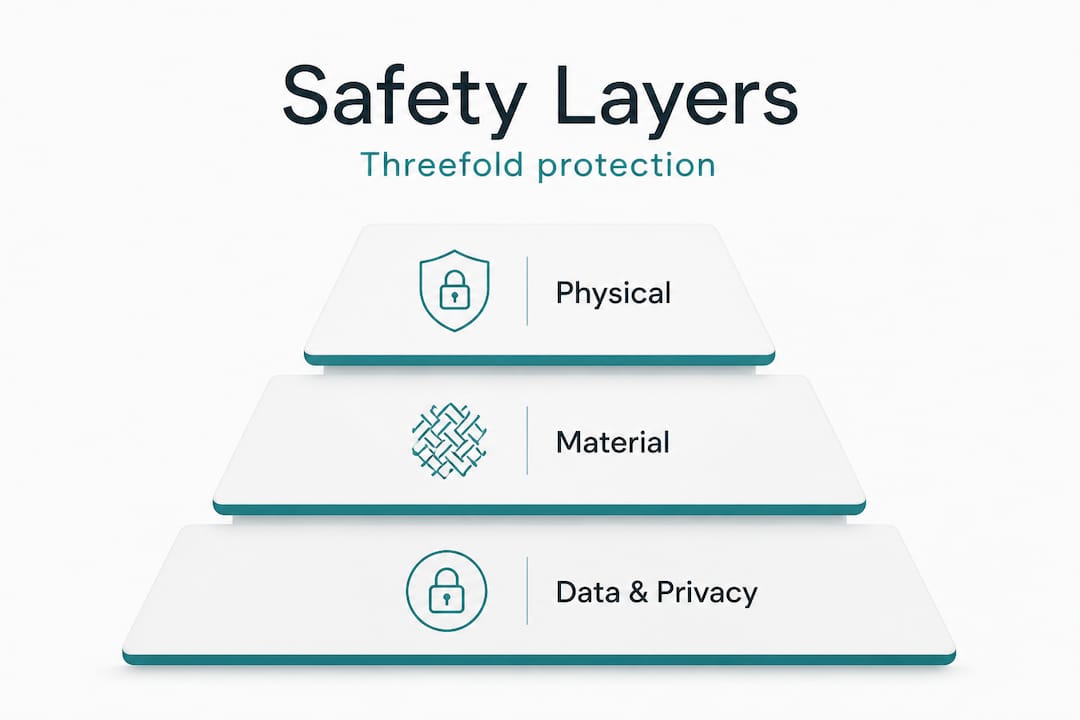
Physical safety covers the structural design of a product. Does it have a flared base to prevent unintended internal travel? Are edges smooth? Are motors adequately sealed? Chemical safety, meanwhile, asks what the product is actually made from and whether those materials are stable, non-reactive, and free of harmful compounds. The final layer, privacy safety, has become increasingly relevant as app-enabled vibrators, couples’ devices, and remote-controlled stimulators now transmit personal and biometric data via Bluetooth or Wi-Fi.
Many guides treat safety as a simple checklist. In reality, safety is multi-layered_2023/988), covering regulatory compliance, product-specific design, and the context in which a person actually uses and maintains the item. A beautifully designed silicone vibrator can still be a privacy risk if the companion app harvests location data without your consent.
Key safety qualities to evaluate before purchase:
- Material composition and absence of harmful substances
- Clear manufacturer information and country of origin
- Waterproofing ratings that match intended use
- Retrieval features for insertable products
- App connectivity and documented data practices
- Cleaning compatibility with the stated materials
Choosing safe sex toy materials is one of the most impactful decisions you can make. A product made from body-safe silicone, glass, or stainless steel sits in an entirely different risk category from one made from unlabelled “jelly rubber” or soft PVC. Reading our sex toy safety tips will also help you understand how usage habits and cleaning routines contribute directly to your overall safety.
“Safety in intimate products is not a single certificate or a CE mark. It is a combination of material science, thoughtful design, and informed personal practice working together.”
Pro Tip: Before purchasing any app-connected device, search the brand’s name alongside “privacy policy” and “data breach” to see what independent reviewers have found. A brand’s transparency in this area tells you a great deal about its values.
How European safety laws protect you — and where gaps remain
European consumers benefit from some of the most robust product safety legislation anywhere in the world. However, it is worth understanding exactly how those protections work in practice, particularly when applied to intimate products.
The General Product Safety Regulation, which set stricter EU standards_2023/988) from December 2024 onwards, applies broadly to consumer goods sold in the EU market. It requires that products are demonstrably safe before they reach shelves, and it empowers market surveillance authorities to act when risks are identified. REACH, the chemical regulation framework, restricts dangerous chemicals found in materials and finished products, including heavy metals and certain plasticisers.
Both frameworks provide a meaningful baseline. The problem is that intimate products do not fit neatly into any single regulated category. They are not classified as medical devices, cosmetics, or textiles. This creates a grey zone in which the materials contacting the most sensitive and permeable areas of the body face less scrutiny than, for example, a face cream or a children’s toy.
| Protection area | Covered under EU law | Gaps that exist |
|---|---|---|
| Harmful chemicals (e.g., heavy metals) | Yes, via REACH | Threshold limits may not reflect intimate-contact risk |
| General product design safety | Yes, via GPSR | No intimate-specific design standards |
| Toxicological evaluation for mucous membrane contact | Partial | Critical gap identified by researchers |
| App data and privacy | Partially, via GDPR | No specific enforcement for intimate device apps |
| Labelling of all materials used | Not mandatory | Ingredient lists often absent |
Risks not fully addressed by current law:
- Phthalates at concentrations below REACH thresholds but above levels considered appropriate for intimate contact
- Softening agents and dyes in unlabelled elastomers
- Fragrance compounds added to “realistic” products that are not disclosed
- Firmware vulnerabilities in connected devices
- Lack of standardised lifetime testing for insertable items
The intimate shopping checklist we have compiled gives you a practical tool for screening purchases against these exact risk areas, helping you go beyond the legal minimum and focus on what actually matters for your body.
Why material choice and quality control matter
Regulations set a floor, not a ceiling. The materials a manufacturer chooses and the quality controls applied during production can either inch just above that floor or rise significantly above it. For intimate products, the difference in practice is substantial.
| Material | Body safety rating | Easy to sterilise | Porous | Notes |
|---|---|---|---|---|
| Medical-grade silicone | Excellent | Yes | No | Gold standard for most toys |
| Borosilicate glass | Excellent | Yes | No | Temperature-play compatible |
| Stainless steel | Excellent | Yes | No | Highly durable, hypoallergenic |
| ABS hard plastic | Good | Partially | No | Safe if uncoated and undyed |
| TPE / TPR | Moderate | No | Yes | Requires condom use, replace regularly |
| Jelly / PVC rubber | Poor | No | Yes | Often contains phthalates, avoid |
The table above makes one thing immediately clear: porosity is a decisive factor. Porous materials harbour bacteria even after cleaning, which matters significantly when products come into contact with mucous membranes. Research has confirmed that phthalates and parabens in certain intimate products may raise genuine health concerns, particularly through repeated exposure.
Steps to identify high-quality, lower-risk products:
- Look for explicit material labelling. If the listing says “body-safe” without naming the actual material, that is a red flag.
- Confirm the manufacturer’s country of origin and check whether independent safety certifications are listed.
- Research the brand. Established companies with customer service, warranty policies, and documented testing protocols earn trust for a reason.
- Search for third-party reviews that specifically discuss material quality, not just performance.
- Verify that insertable products have a physical retrieval feature appropriate to their intended use.
- Choose products with clear care instructions that match the material listed. A “silicone” toy that cannot be boiled is likely not 100% silicone.
Biocompatibility, the degree to which a material interacts safely with biological tissue, is a standard applied rigorously in medical devices. Intimate products are not required to meet this standard, yet it is exactly what matters most. Choosing best materials for intimacy and following a reliable intimate toy care guide can help you apply this standard yourself, even without a regulatory mandate.
Pro Tip: Medical-grade silicone can be verified with a simple flame test. Touch a brief flame to an inconspicuous part of the product. Genuine silicone chars white or grey and smells faintly of candle wax. Inferior rubber or TPE blackens and smells acrid. Only do this on a small area and with care.
User responsibility: Hygiene, privacy and safe shopping
Regulations and material quality together create the conditions for safety. Your personal habits are what actually realise that potential in everyday use. Two products made from the same material, used and maintained differently, will deliver very different outcomes over time.
Critical user-driven safety habits:
- Clean every product before and after every use, using a method appropriate to the material
- Store items separately in clean pouches to avoid material degradation caused by contact between different types of rubber or silicone
- Inspect products regularly for surface cracks, discolouration, or unusual odours, all of which suggest material breakdown
- Replace porous products regularly regardless of visible condition, as bacteria colonise internally
- Never share products without appropriate barriers
- Read the privacy policy of any companion app before installation, specifically looking for data sharing and retention policies
Research into smart intimate products found that some devices share intimate data with third-party services without making this sufficiently clear to users. Privacy-by-design and data minimisation are not optional features for intimate products. They are fundamental requirements that you should treat as non-negotiable.

When it comes to discreet purchasing, several practical habits reduce your exposure. Always buy from retailers with documented privacy policies, clear returns procedures, and plain packaging commitments. Use secure payment methods, and check whether the transaction appears under a neutral company name on bank statements. Our full guide on sex toy cleaning tips and our resource on secure shopping steps offer detailed, practical support for both areas.
Pro Tip: For app-enabled devices, review the permissions your phone requests before and after installation. If a pleasure device app requests access to your contacts, microphone, or location, revoke those permissions immediately. Legitimate apps require far less than this.
What most guides miss about intimate product safety
Most articles on this subject end with a reassuring list of certifications to look for and materials to avoid. That is useful, but it misses something important. Regulatory compliance is a minimum condition, not a guarantee of personal suitability. A product that passes every EU check can still be the wrong choice for your body, your use case, or your privacy preferences.
The critical gap in toxicological evaluation for sexual health products is not a minor technicality. It reflects a broader reality: the intimate product industry has grown faster than the policy frameworks designed to oversee it. Legislators are working to catch up, but they are not there yet. In that gap, your informed judgement is the most reliable protection available.
Price is not a reliable proxy for safety. Expensive products can still be made from unlabelled composites. Budget products can, occasionally, use excellent materials. What matters is verifiable information: named materials, manufacturer transparency, independent testing, and a track record in the market.
We have reviewed the real-world material comparisons in detail, and what consistently stands out is that genuinely safe products from reputable manufacturers are willing to be specific. They name their materials. They document their testing. They offer customer support. Vagueness, on the other hand, almost always signals something worth scrutinising more closely.
The uncomfortable truth is that no compliance certificate, price point, or brand reputation fully replaces your own curiosity and scepticism. The best intimate product safety practice is not passive. It is active, ongoing, and personal. Treat it as part of the broader conversation you have with yourself and your partner about what you actually want from an intimate product, not just whether it has a CE mark on the box.
Enhance your safety and pleasure with trusted products
Everything covered in this guide points towards a single practical outcome: choosing intimate products from sources that take safety, quality, and privacy as seriously as you do.

At Intimate Elegance, we curate our range specifically with these standards in mind. Every product listed on our platform comes from established manufacturers with verifiable material information, and our EU-wide delivery is always discreet, with plain packaging and neutral billing details. Whether you are looking for your first quality purchase or expanding an existing collection, you will find detailed product descriptions, honest material listings, and a shopping experience designed entirely around your privacy and confidence. Browse our full collection at Intimate Elegance and shop with the certainty that your safety and discretion are always the priority.
Frequently asked questions
Are all intimate products sold in the EU safe by default?
No. While EU laws set a baseline, some intimate products fall outside strictly regulated medical categories and may not receive adequate toxicological evaluation specific to their intimate-contact use.
How can I check if a product is free from harmful chemicals?
Review the full materials list and look for explicit reference to REACH compliance or confirmation that substances such as phthalates and parabens are absent.
What should I look for in app-enabled or smart intimate products?
Choose devices with documented privacy policies that confirm data minimisation practices, limited third-party sharing, and clear security measures for any transmitted personal information.
How often should I clean my intimate products?
Clean after every single use using a method appropriate for the material type, and always follow the manufacturer’s specific care instructions to avoid material degradation.
Is there an easy way to spot red flags whilst shopping for intimate products?
Yes. Avoid any products with no listed materials, unclear country of manufacture, absent safety information, or no accessible manufacturer contact details. These are consistent indicators of products that have not been held to an adequate standard.
Recommended
- Secure sex toy buying steps for discreet, quality pleasure – Intimate Elegance
- Intimate shopping checklist for quality sexual wellness – Intimate Elegance
- Best sex toy materials for safe, pleasurable choices – Intimate Elegance
- Why quality matters: enhance intimacy with better sex toys – Intimate Elegance