

How explainer blogs shape intimacy and sexual well-being
Explainer blogs are one of the most effective tools adults have for improving intimacy, and the evidence from 2025 digital sexual health research backs that up. They reduce the fear of discussing sexual needs, supply vocabulary that partners often lack, and create a private, low-pressure space for learning that formal education rarely provides. Whether you are trying to open a difficult conversation with a partner or simply understand your own desires better, well-written educational content can shift the dynamic considerably.
What role do explainer blogs play in intimacy?
The core function is straightforward: explainer blogs turn private anxieties into shared knowledge. They give adults a neutral, expert voice that makes sensitive topics feel discussable rather than shameful. Research confirms that web-based sexual health education consistently improves knowledge and attitudes, with self-efficacy growing further when content includes interactive elements and feedback.
Key ways explainer blogs improve intimacy:
- They supply vocabulary for desires and boundaries that many adults were never taught
- They reframe personal requests as shared topics of curiosity rather than demands
- They model sex-positive attitudes, reducing blame and encouraging cooperation
- They support anonymous, self-paced learning that traditional sex education rarely offers
- They give couples a shared reference point for conversations that might otherwise feel too high-stakes
How explainer blogs reduce sexual silence between partners
The biggest barrier to intimacy is often what relationship educators call “sexual silence”: the fear of voicing needs, fantasies, or concerns to a partner. Relationship educators note that blogs turn what would otherwise be a personal, vulnerable request into a shared study topic, which dramatically lowers the emotional stakes.

When one partner shares an article rather than making a direct ask, the conversation shifts from “I want this” to “what do you think about this?” That reframing matters. It removes the pressure of rejection and replaces it with collaborative curiosity. Blogs on adult product terminology do exactly this: they give couples a concrete, external starting point.
Pro Tip: Read an explainer blog together, then pause after each section to share one reaction. You do not need to agree — the conversation itself is the point.
- Blogs provide non-threatening language for discussing sensitive issues
- They shift high-stakes personal requests into shared discussions
- They facilitate collaborative problem-solving rather than blame
How a sex-positive mindset grows through blog content
Sex positivity is a mindset built on empathy and personal autonomy, not a licence for anything goes. Therapists and educators emphasise that blogs function as neutral third parties, helping partners move from a blame frame to a cooperative one. That distinction changes the entire texture of a relationship.
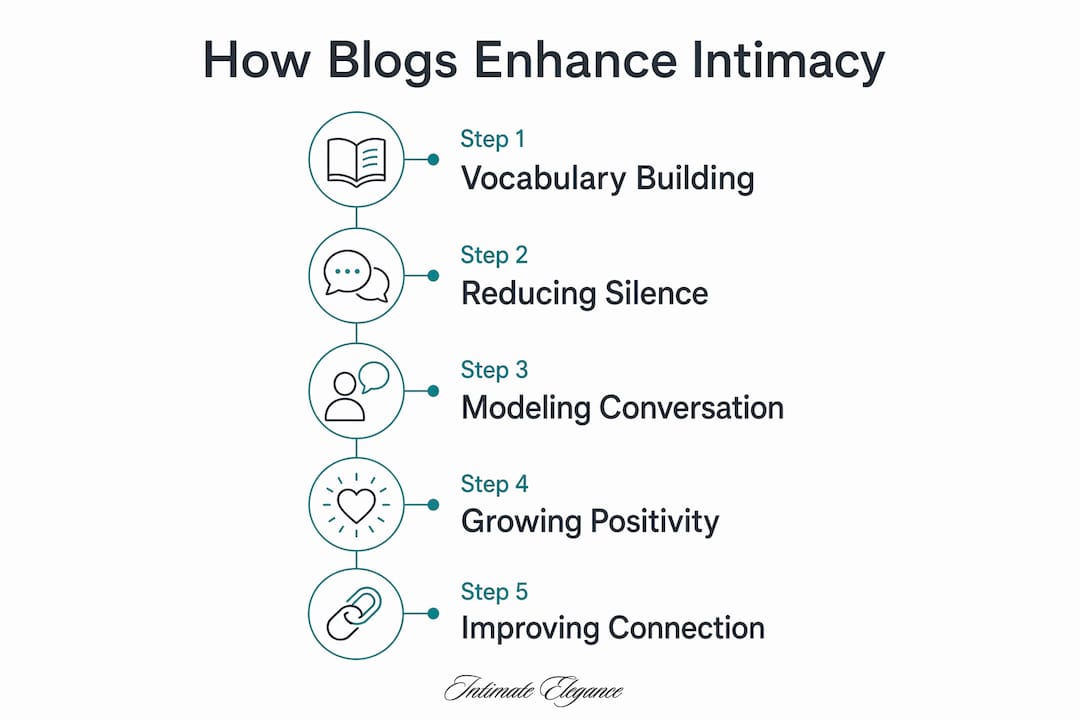
The practical benefits are concrete. Sex-positive couples report greater emotional connection and authenticity precisely because they can share fantasies, admit insecurities, and ask for what they want without fear of judgement. Body acceptance and self-esteem tend to follow, because the focus shifts from performance to mutual pleasure.
Common misunderstandings worth addressing:
- Sex positivity does not mean endorsing every sexual behaviour; it means respecting autonomy and consent
- It is not incompatible with religious or cultural values when approached thoughtfully
- Overemphasis on sex at the expense of emotional intimacy is a real risk, and good blogs acknowledge it
Why anonymity and accessibility make digital sexual education work
Digital platforms lower the emotional threshold for engaging with sexual health content in a way that classroom settings simply cannot replicate. Adults can read at midnight, revisit a section three times, and never have to answer a question in front of anyone. That privacy is not a minor convenience; for many people it is the only reason they engage at all.
Formal sex education leaves significant gaps. Research on alternative sex pedagogy shows that adults actively seek out blogs to fill vocabulary and conceptual gaps that school curricula never addressed. The result is informal but genuinely effective: readers gain practical understanding of anatomy, desire, and communication that improves their relationships.
Research note: A 2025 systematic review confirmed that web-based sexual health education produces consistent improvements in knowledge and attitudes among learners, with the strongest gains in programmes that include interactive feedback.
How Intimate-elegance provides expert-backed educational content
Intimate-elegance positions itself as more than a retail platform. Its blog, authored by Bartosz, covers topics from communication in relationships to product guidance, grounding each piece in the kind of specificity that builds genuine reader confidence. The role of education in intimacy is treated as a serious subject, not a marketing afterthought.
What makes the Intimate-elegance blog credible:
- Named authorship: Bartosz signs the content, which creates accountability
- Practical scope: guides cover communication, product use, and emotional well-being together
- Discretion: the platform’s privacy-first ethos extends to its educational content, so readers can engage without concern
- Consistency with research: content aligns with findings from sexual health education studies rather than repeating myths
When evaluating any explainer blog on intimacy, look for named authors with stated expertise, references to research or clinical sources, and a clear distinction between opinion and fact. Blogs that conflate the two, or that push products without educational substance, are worth skipping.
What makes an explainer blog on intimacy genuinely effective?
The best blogs on intimacy share a few structural qualities that separate them from generic lifestyle content. Educational content designed for adult learners works best in focused sessions of 40–45 minutes, which translates in blog terms to pieces that are thorough but not exhausting. Readers retain more when content is structured, specific, and does not try to cover everything at once.
Effective blogs also use scenario-based framing: instead of abstract advice, they describe recognisable situations. A piece on initiating conversations about desire lands differently when it walks through a realistic exchange rather than offering bullet-pointed tips. The role of online guides in sexual well-being is most pronounced when the content feels written for a real person, not a demographic.
How explainer blogs help partners communicate more openly
Blogs act as asynchronous conversation starters. One partner reads something, shares it, and the other responds in their own time, without the pressure of an immediate reaction. This outsourcing of vulnerability, as some educators describe it, reduces interpersonal anxiety around taboo topics considerably.
The mechanism is simple but powerful. When a couple reads the same piece on, say, communicating boundaries, they arrive at the conversation with shared language and a shared frame of reference. Neither person has to be the one who “brought it up.” The blog did. That small shift in ownership makes difficult conversations far more likely to happen, and far less likely to feel like an accusation.
Common pitfalls and misinformation in explainer blogs
Not all blogs on intimacy are worth your time, and some actively mislead. The most common problems are unsourced claims presented as fact, advice that pathologises normal variation in desire, and content that blurs education with product promotion without disclosure.
Misinformation spreads quickly in this space because readers often have no prior framework to test claims against. A blog asserting that a specific frequency of sex predicts relationship health, with no citation, is guessing. Readers deserve better. The practical test: does the blog name its sources, acknowledge complexity, and distinguish between what research shows and what the author believes? If not, treat it as opinion, not education.
Key takeaways
Explainer blogs improve intimacy most when they combine anonymity, credible authorship, and practical language that couples can actually use in conversation.
| Point | Details |
|---|---|
| Sexual silence is the core barrier | Blogs give partners shared vocabulary and a neutral starting point for difficult conversations. |
| Sex positivity requires a mindset shift | It centres empathy and autonomy, not permissiveness, and blogs are effective tools for building it. |
| Anonymity drives engagement | Digital platforms lower emotional barriers to learning that classroom settings cannot match. |
| Credibility markers matter | Named authors, research references, and clear opinion-versus-fact distinctions separate reliable blogs from noise. |
| Focused content works best | Educational sessions of 40–45 minutes produce the strongest knowledge gains in adult learners. |
FAQ
What is the role of explainer blogs in intimacy?
Explainer blogs reduce sexual silence by providing vocabulary, reframing personal requests as shared topics, and modelling sex-positive communication. Research confirms that web-based sexual health content consistently improves both knowledge and attitudes.
Can reading blogs together actually improve a relationship?
Yes. Sex-positive couples who consume educational content together report greater emotional connection and authenticity, because shared reference points make difficult conversations easier to start.
How do you tell a credible intimacy blog from a misleading one?
Look for named authors with stated expertise, references to research or clinical sources, and a clear separation between fact and opinion. Blogs that push products without educational substance or cite no sources warrant scepticism.
Why does anonymity matter in sexual health education?
Anonymity lowers the emotional threshold for engaging with sensitive material. Online learners consistently report feeling safer and more comfortable exploring topics they would not raise in a group or classroom setting.
Does Intimate-elegance offer educational content on intimacy?
Yes. The Intimate-elegance blog, authored by Bartosz, covers communication, product guidance, and emotional well-being, grounded in a privacy-first approach that reflects the platform’s broader ethos.