

What is sexual empowerment: a guide for adults
TL;DR:
- Sexual empowerment is a personal process that involves understanding, exercising, and achieving authentic sexual choices. It differs from sexual liberation, which focuses on dismantling systemic restrictions at a societal level. Building empowerment requires self-knowledge, clear communication, ongoing consent, and overcoming cultural shame to foster healthier relationships and overall wellbeing.
Sexual empowerment is defined as the personal agency to understand, define, and express your sexuality authentically, grounded in informed choice and self-knowledge. The academic framework most widely used to describe it is the WGE-SRH model, which breaks sexual empowerment into three stages: the existence of choice, the ability to exercise that choice, and the achievement of that choice as a lived, volitional experience. This is not the same as sexual liberation, which is a collective socio-political movement. Sexual empowerment is personal. It lives inside the individual, not in protest movements or policy change. Understanding this distinction is the first step towards building a genuinely fulfilling intimate life.
What is sexual empowerment and how does it work?
Sexual empowerment is defined as personal agency across three distinct stages. Each stage builds on the last, and skipping one leaves the process incomplete.
- Existence of choice. You must first know that options exist. This means access to accurate information about your desires, your body, and your rights within intimate relationships. Without this foundation, no real choice is possible.
- Ability to exercise choice. Knowing your options is not enough. You need the confidence and communication skills to act on them. Sexual agency means making conscious decisions and expressing desires and limits without shame or apology. This is distinct from sexual confidence, which is simply belief in your choices. Agency is the capacity to communicate and enact those choices.
- Achievement of choice. This is the volitional sexual experience itself. It is the moment when your desires, boundaries, and communication align to produce an encounter that feels genuinely yours.
Self-knowledge sits at the heart of all three stages. You cannot communicate what you have not yet identified in yourself. Practices like journalling about desires, reading credible sexual health resources, or working with a therapist all build this foundation. The adult intimacy checklist from Intimate-elegance offers a structured starting point for mapping your own boundaries and preferences.
Pro Tip: Start with a simple written list of what feels good, what feels neutral, and what feels off-limits. Revisiting this list every few months shows you how your preferences evolve, which is normal and healthy.

How does sexual empowerment differ from sexual liberation?
These two concepts are related but operate at completely different levels. Confusing them leads people to either dismiss personal growth as political posturing or to expect individual change to fix systemic problems.
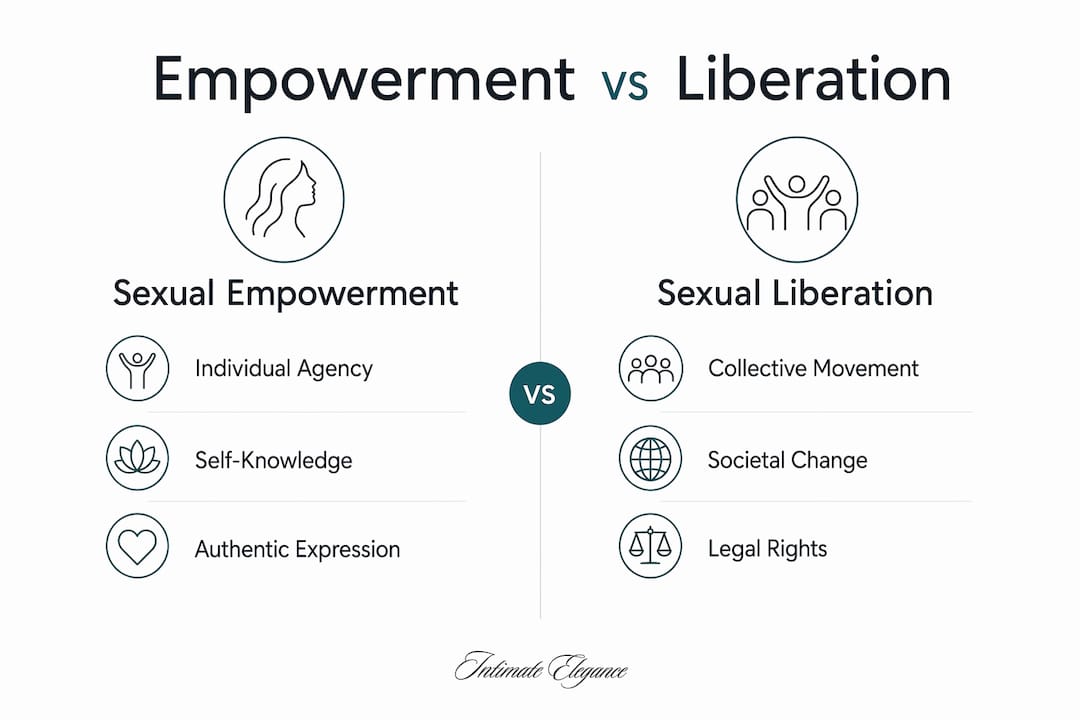
| Concept | Focus | Level | Goal |
|---|---|---|---|
| Sexual empowerment | Individual agency and self-knowledge | Personal | Authentic, chosen sexual experience |
| Sexual liberation | Dismantling institutional and legal constraints | Collective, socio-political | Systemic change in laws and social norms |
Sexual liberation is a collective movement that challenges restrictive laws, societal taboos, and institutional barriers. It operates at the level of culture and policy. Sexual empowerment, by contrast, operates inside the individual. You can be personally empowered within a conservative cultural context, and you can feel profoundly disempowered even in a society that has achieved significant sexual freedoms.
The practical implication is significant. Waiting for society to change before you feel entitled to your own desires is not empowerment. Empowerment is the work you do internally, regardless of the external environment. That said, systemic barriers do affect how easy or difficult that internal work becomes, which is why both concepts matter.
What cultural and social factors influence sexual empowerment?
Culture shapes the raw material you have to work with. Gender norms, religious frameworks, family attitudes, and media representations all influence how you understand your own desires and how much permission you feel to act on them.
Key influences include:
- Gender inequities. Cultural and gender norms shape sexual empowerment by influencing negotiation capacity and autonomy. Women and girls in particular face systemic barriers to sexual self-determination that vary significantly by geographical and cultural context.
- Performative scripts. Media and peer culture often replace genuine desire with performance. People feel pressure to want what they are told they should want, rather than what actually resonates with them.
- Shame and silence. Cultures that treat sexuality as inherently shameful make self-knowledge harder to develop. Shame is not a neutral feeling. It actively suppresses the self-reflection that empowerment requires.
Empowerment does not mean rejecting all cultural norms. It means negotiating within them according to your own values. A person who chooses abstinence or traditional sexual values is just as empowered as someone who makes more expansive choices, provided those choices are genuinely their own and free from internal shame.
Pro Tip: When you notice a strong emotional reaction to a sexual topic, whether attraction, disgust, or anxiety, treat it as information rather than instruction. Ask yourself where that reaction comes from before deciding whether it reflects your actual values.
How can you enhance your sexual empowerment practically?
Building sexual empowerment is not a single event. It is a continuous process of self-discovery where vulnerability is not a weakness but a requirement. The following practices build it over time.
- Develop self-awareness of desires and limits. Spend time understanding what you actually want, separate from what you think you should want. This requires honest reflection, not performance. Reading about sexual self-expression can help you articulate desires you have not yet put into words.
- Communicate clearly and without apology. State your desires and limits directly. Vague hints leave room for misinterpretation. Clear language protects both you and your partner.
- Treat consent as ongoing, not one-off. Consent is an active, verbal process that must be re-established as activities change. Safe words are a practical tool for this, not just in high-intensity settings but in any encounter where you want a clear, agreed signal to pause or stop.
- Embrace vulnerability. Authentic intimacy requires showing up honestly, including in moments of uncertainty or imperfection. Vulnerability is not exposure. It is the deliberate choice to be seen.
- Resist performative pressure. True empowerment includes the full range of authentic choices, including abstinence or traditional values, without shame. The goal is not to be more liberated by someone else’s definition. The goal is to be more genuinely yourself.
“Sexual agency means making conscious decisions and expressing desires and limits without shame or apology.” This is the operational definition of empowerment in practice.
What are the benefits of sexual empowerment for relationships and wellbeing?
The benefits of sexual empowerment extend well beyond the bedroom. Empowered individuals experience improved relational satisfaction and positive body image. These are not minor side effects. They represent a measurable shift in how people relate to themselves and others.
| Benefit | What it looks like in practice |
|---|---|
| Deeper intimacy | Partners share desires openly, creating genuine connection rather than guesswork |
| Emotional safety | Clear boundaries and honest communication reduce anxiety in relationships |
| Body positivity | Self-acceptance grows when sexuality is no longer a source of shame |
| Greater confidence | Knowing and asserting your desires builds self-assurance across all areas of life |
| Overall wellbeing | Sexual satisfaction connects to broader life satisfaction and mental health |
The relationship between empowerment and wellbeing runs in both directions. Feeling good about your intimate life supports your mental health. Better mental health makes it easier to communicate and set boundaries. The two reinforce each other over time.
Key takeaways
Sexual empowerment is the ongoing practice of knowing, communicating, and acting on your authentic desires, built across three stages: choice existence, choice exercise, and choice achievement.
| Point | Details |
|---|---|
| Three-stage framework | Sexual empowerment moves through choice existence, exercise, and achievement in sequence. |
| Agency over confidence | Sexual agency means communicating and enacting desires; confidence alone is not enough. |
| Empowerment vs liberation | Empowerment is personal and internal; liberation is collective and socio-political. |
| Culture shapes the work | Gender norms and shame influence how easy or hard self-knowledge becomes. |
| Ongoing consent matters | Consent is a continuous verbal process, not a single agreement at the start. |
Bartosz’s take: empowerment is not a destination
People often come to this topic expecting a checklist. Do these five things and you will be sexually empowered. That is not how it works, and I think the checklist framing actually does harm. It turns something deeply personal into another performance standard to fail against.
What I have observed is that the people who describe themselves as genuinely empowered in their intimate lives are not the ones who have done the most or tried the most. They are the ones who have become honest with themselves. That honesty is uncomfortable. It means sitting with desires you do not fully understand yet, and communicating needs that feel exposing to say out loud.
The WGE-SRH framework is useful precisely because it does not tell you what to choose. It only asks whether the choice is genuinely yours. That is a harder question than it sounds. Most of us carry a significant amount of inherited opinion about what we should want, and separating that from actual desire takes real time and attention.
My honest view is that the biggest barrier to sexual empowerment is not lack of information. It is the fear of being judged, by a partner, by a culture, or by yourself. The practical work is less about learning new techniques and more about reducing that fear, one honest conversation at a time.
— Bartosz
Products from Intimate-elegance to support your exploration
Curiosity about your own desires is the starting point. Having the right tools to act on that curiosity makes the process more enjoyable and less abstract.
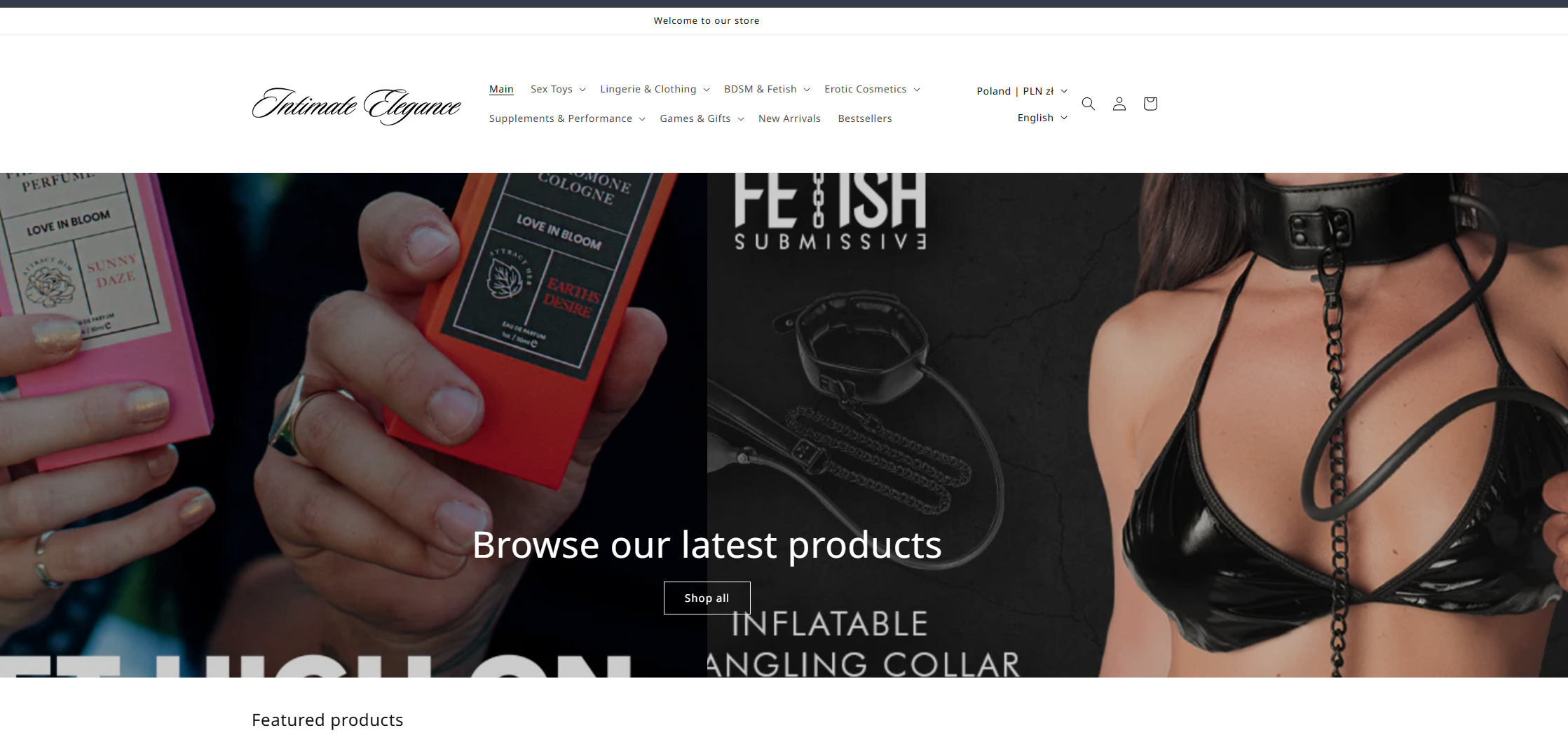
Intimate-elegance offers a curated range of premium pleasure products designed for adults who take their intimate wellbeing seriously. The TOYJOY Amazing Pleasure Sex Toy Kit is a strong starting point for anyone building self-awareness through exploration. It brings together multiple sensations in one thoughtfully assembled kit. For those interested in couples’ play, the double penis ring with clitoral stimulator supports shared pleasure and open communication between partners. All orders ship with full discretion across the EU.
FAQ
What is the meaning of sexual empowerment?
Sexual empowerment is the personal agency to understand, define, and express your sexuality authentically. It operates across three stages: knowing your choices exist, being able to act on them, and achieving a volitional sexual experience.
How does sexual empowerment differ from sexual freedom?
Sexual freedom refers to the absence of external restriction. Sexual empowerment is the internal capacity to make and act on genuine choices, regardless of how much external freedom exists.
Is sexual empowerment only relevant for women?
Sexual empowerment applies to all adults. Research does show that gender inequities create specific barriers for women and girls, making the concept particularly significant in those contexts, but the framework applies universally.
How does consent relate to sexual empowerment?
Consent is a core mechanism of sexual empowerment. It must be an ongoing, verbal process rather than a single agreement, and it gives both partners the ability to shape the encounter according to their actual desires and limits.
Can someone be sexually empowered and still hold traditional values?
Yes. True sexual empowerment includes the full range of authentic choices, including abstinence or traditional values, provided those choices are genuinely your own and free from shame or external coercion.